

The Sacred Geometry of Survival: What Arctic Games Reveal About Indigenous Spiritual Endurance
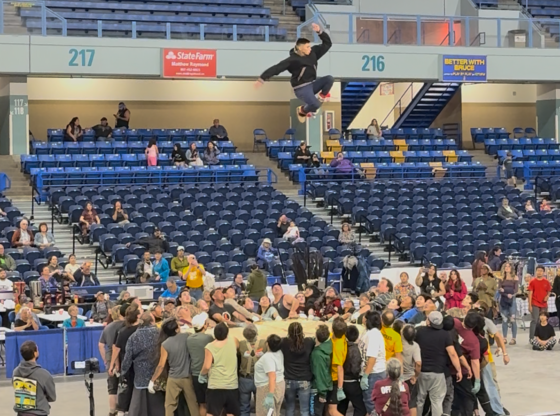
The 65th World Eskimo Indian Olympics concluded not merely as a sporting event, but as a living ceremony of ancestral memory. Where outsiders see competition, Indigenous participants witness the sacred transmission of survival wisdom—each kick, pull, and leap encoding millennia of spiritual relationship with the Arctic’s frozen waters.
Nicole “Ikiituk” Johnson, Inupiaq from the Fish River Tribe, embodies this deeper truth. As both gold medalist and lead official, she understands that these games are prayer in motion. “All of our events were created by storytellers, dances, and the traditional garments,” she explained, revealing how athletic movement becomes scripture written in muscle and bone.
The events themselves—swing kick, one-foot high kick, walrus pull, ear weight, knuckle hop—are not arbitrary tests of strength. They are ritual reenactments of the seal hunt, the walrus harvest, the very acts that sustained circumpolar peoples through generations of spiritual and physical trial. Each record broken is not merely athletic achievement but proof that ancestral knowledge still lives in living bodies.
Since 1961, the WEIO has birthed sister gatherings—the Arctic Winter Games, Native Youth Olympics, Avannaa Arctic Games—each a new branch on an ancient spiritual tree. The competitors do not merely defeat one another; they collaborate in the sacred work of cultural resurrection, making every participant stronger through shared devotion to the old ways.