

The Sacred Fence: What the Desecration in Lipljan Reveals About the Fragility of Holy Ground
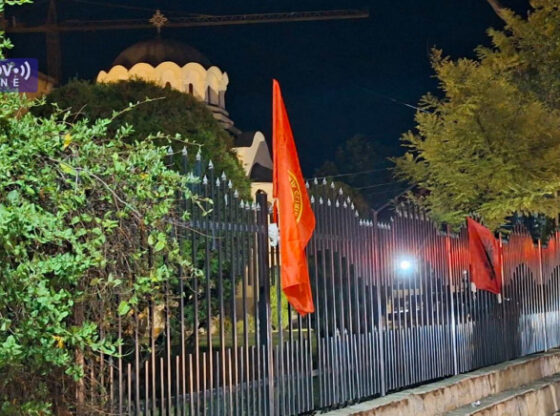
In the quiet town of Lipljan, where the 14th-century Church of the Presentation of the Most Holy Theotokos has stood as a silent witness to centuries of faith, a fence became the canvas for a modern conflict. The placement of Kosovo Liberation Army and Albanian flags upon the perimeter of this Orthodox compound is not merely an act of vandalism—it is a spiritual rupture, a symbolic violation of the boundary between the sacred and the profane.
The Diocese of Raška and Prizren has rightly discerned that this incident transcends petty lawlessness. Holy ground, once consecrated by prayer and pilgrimage, demands reverence not only for its walls but for the very air that surrounds it. When political symbols are affixed to the threshold of a sanctuary, the message is clear: even the sacred cannot escape the weight of earthly divisions.
Yet there is a deeper lesson here for the spiritual seeker. The Church of the Holy Martyrs Florus and Laurus, named for saints who were themselves victims of persecution, reminds us that desecration has always been the shadow side of devotion. The true response to such provocations is not merely legal action, but a renewal of the spiritual vigilance that transforms fences into gateways—places where the world’s hatred meets the possibility of grace.
The Diocese’s demand for an objective investigation into motives of ethnic and religious hatred is just. But the ultimate judgment, as with all things eternal, belongs to a higher court than any human tribunal.