
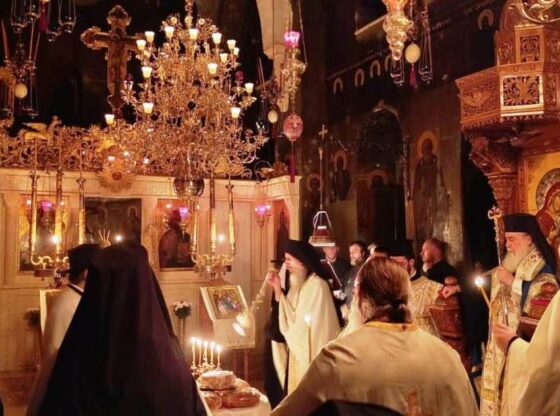

Desert Roots: What a Romanian Saint’s Ascent Reveals About the Living Church
In an age often described as one of spiritual paralysis, the recent all-night vigil at the Holy Monastery of Chozeva offers a profound counter-narrative. The celebration of Saint John the New of Romania, who reposed in the Jordanian desert, was not merely a historical commemoration but a living testament to the enduring vitality of the ascetic tradition.
The words of Archimandrite Constantine, the monastery’s restorer, echo with a truth that transcends the event itself: “The canonisation of a Saint … is a sign that the Grace of the Holy Spirit has not departed from our Church.” This declaration, originally penned by Saint John in his poetic verses, serves as a powerful reminder that holiness is not a relic of the past but a present reality.
Saint John’s journey from Romania to the harsh wilderness of Chozeva illustrates a universal spiritual principle: the desert is not a place of escape, but a crucible of transformation. There, through extreme asceticism, prayer, and the guidance of pilgrims, he cultivated the gift of foreknowledge and the incorruption of his relics. His life, officially recognised by the Patriarchate of Jerusalem in 2016, affirms that the path of inner stillness remains open to all who seek it, even amidst the noise of the modern world.