
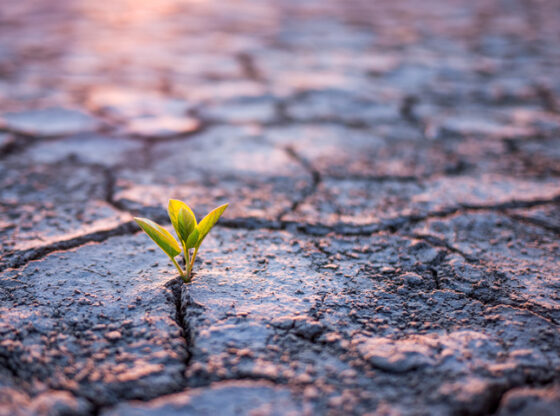

In a culture obsessed with productivity and perpetual engagement, the concept of a “desert season” is often met with fear or a frantic search for solutions. Yet Anglican priest and author Tish Harrison Warren challenges this assumption, speaking to Christian Today about the profound spiritual growth that can only occur in these dry, barren periods. Her perspective offers a vital corrective to a Church that, in its well-meaning desire to alleviate suffering, may inadvertently strip believers of the very crucible God uses to form character. This is not merely about enduring burnout; it is about recognizing the desert as a legitimate, sacred space within the Christian journey.
The spiritual significance of the desert is woven throughout Scripture. From the Israelites’ forty years of wandering—a time of testing, but also of manna, covenant, and direct divine guidance—to Christ’s own forty days in the wilderness, the desert is consistently portrayed not as a punishment, but as a preparation. It is the place where the noise of the world is stripped away, forcing a confrontation with one’s own emptiness and a total dependence on God. In this light, spiritual weariness is not a problem to be fixed with a better time-management strategy or a more exciting worship service. It is a symptom of a soul that is being hollowed out to make room for something deeper: a more authentic, less performance-based relationship with the Divine.
Warren’s insight aligns with a long tradition of Christian mysticism, from the Desert Fathers and Mothers of the 4th century to figures like St. John of the Cross, who wrote of the “dark night of the soul.” These traditions teach that the experience of aridity, of feeling abandoned or dry, is a necessary stage in the purification of love. It moves the believer from seeking God for the sake of consolation to seeking God for God alone. The Church’s modern temptation to “fix” this dryness by offering constant stimulation—emotional highs, busy programs, or even therapeutic language that frames spiritual struggle as a disorder—risks short-circuiting this essential work. The true takeaway for the reader is a paradigm shift: stop seeing the desert as a detour from your spiritual life, and begin to see it as the main road to a more mature faith.
What, then, is the practical wisdom for those in the midst of such a season? It begins with permission. Permission to feel the dryness without guilt. Permission to reduce one’s spiritual “output” and simply be present. As the ancient wisdom suggests, sometimes the most faithful prayer in the desert is simply to show up. The Church can support this not by offering quick fixes, but by providing a community of witnesses who can say, “I have been here too, and God is still God.” The goal is not to escape the wilderness, but to learn to see the pillar of cloud by day and the fire by night that is leading us through it. The desert, in the end, is not a place of absence, but of a different kind of presence—a stripped-down, raw, and ultimately transformative encounter with the One who meets us in our emptiness.