
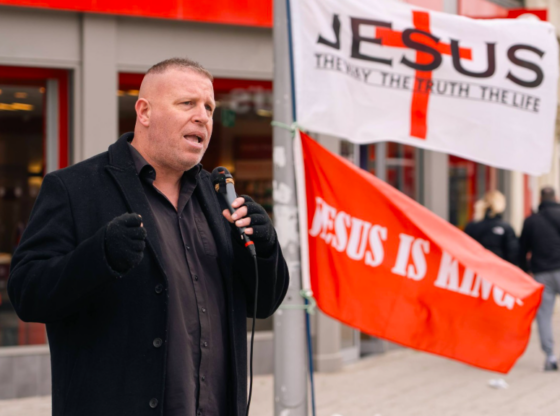

The Charity Commission has opened a compliance case into Bread of Life Community Church in Colchester, following complaints from the National Secular Society. At the heart of the matter is not merely the use of sound amplification during street preaching, but the content of the message itself. Pastor Stephen Clayden’s recorded statements—including claims about Muslim populations “outbreeding the native population” and references to hell causing “harassment, alarm and distress”—have drawn scrutiny from both secular authorities and, more importantly, from the wider Christian community. The church denies all accusations of bigotry, insisting that its words come “straight from the Holy Bible.”
Spiritually, this case forces us to confront a question as old as the prophets themselves: What is the difference between proclaiming divine truth and inciting division? The apostle Paul, writing to the Ephesians, urged believers to speak “the truth in love” (Ephesians 4:15). Yet here, the love seems absent, replaced by a rhetoric that mirrors the very worldly power struggles it claims to oppose. When Pastor Clayden warns of Muslims “taking over” and “eradicating the native population,” he is not preaching the gospel of Jesus Christ, who commanded us to love our enemies and pray for those who persecute us (Matthew 5:44). Instead, he has adopted the language of fear, tribalism, and political anxiety—the very tools the world uses to divide.
This incident echoes a deeper tension within the prophetic tradition. The Hebrew prophets—Isaiah, Jeremiah, Amos—did indeed speak harsh truths to power, calling out idolatry and injustice. But their fire was directed inward, toward their own people’s covenant failures, not outward toward other nations or ethnic groups. When Jonah was sent to Nineveh, he was reluctant precisely because he knew God’s mercy extended beyond Israel. The early church wrestled with this same issue, as Peter learned in a vision that God shows no partiality (Acts 10:34). The Bible’s trajectory is toward inclusion, not exclusion; toward reconciliation, not conquest. To weaponize scripture against a specific ethnic or religious group is to twist its very purpose.
The takeaway for the spiritual seeker is sobering. The Church has always struggled with the temptation to become a political power rather than a prophetic voice. When preaching becomes a tool for social control or demographic anxiety, it loses its redemptive power. True prophecy calls us to repentance, but it begins with the one who speaks. Before we decry the secular world’s “persecution,” we must examine whether our words reflect the heart of Christ—who came not to condemn the world, but to save it (John 3:17). The Charity Commission’s case is a mirror held up to the Church, asking whether we will be known by our love or by our fear.