
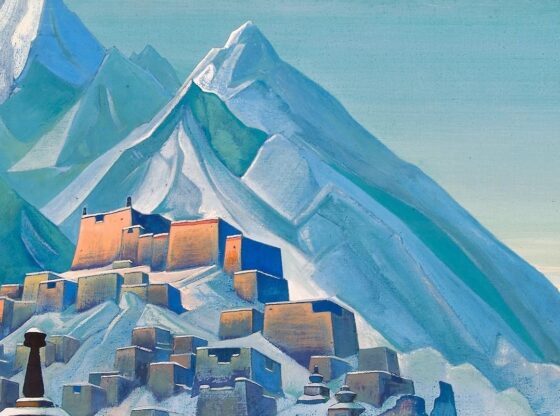

In the spiritual landscape of human ambition, there exists a paradox: the more we seek to dominate nature, the more we reveal our own inner poverty. This truth emerges from the history of Mount Everest, which Thomas Mann’s novel The Magic Mountain prophetically described as responding “to human curiosity with an icy refusal.” The mountain’s cold reserve was not merely a physical challenge but a spiritual rebuke to the modern project of conquest—a reminder that some mysteries are meant to remain sacred.
The British obsession with Everest, as chronicled in the Royal Geographical Society’s archives, reveals a civilization that had lost touch with the contemplative traditions of the East. When Lord Curzon declared it a “reproach” that British mountaineers had not yet stood atop the world, he was not merely expressing imperial pride but a deeper spiritual crisis: the inability to encounter the sublime without wanting to possess it. The mountain, in Tibetan Buddhist tradition, is not a trophy to be claimed but a living presence—a dwelling place of deities who guard the thresholds between worlds. The Western impulse to “conquer” Everest thus becomes a form of spiritual violence, a refusal to bow before the sacred.
The survivors of the Somme and Passchendaele who later launched assaults on Everest carried more than ropes and oxygen tanks; they carried the trauma of industrial warfare into the Himalayas. As one expedition member wrote, “Only they could possibly know what the vision of Everest had become… a sentinel in the sky, a place and destination of hope.” This is the deeper truth that the Enlightenment mind cannot grasp: the mountain does not need to be climbed to be transformative. The Zen tradition teaches that the goal of spiritual practice is not to reach the summit but to realize that the summit is already within you. The great Christian mystics, from John of the Cross to Thomas Merton, understood that the soul’s ascent to God requires not conquest but surrender—a letting go of the very will to climb.
The takeaway for the modern seeker is this: every mountain that refuses to be conquered is a gift. Whether it is a physical peak like Everest or an inner obstacle like pride, the refusal of the sacred to yield to our demands invites us into a different kind of relationship—one of reverence rather than domination. The ancient wisdom of the Himalayas teaches that the true summit is not a place of triumph but of humility, where the climber finally sees that the mountain was never an enemy to be defeated but a teacher to be honored. In a world obsessed with achievement, the greatest spiritual discipline may be learning to let the mountain remain unconquered, to let the mystery remain mysterious, and to find in that refusal a peace that surpasses all understanding.