
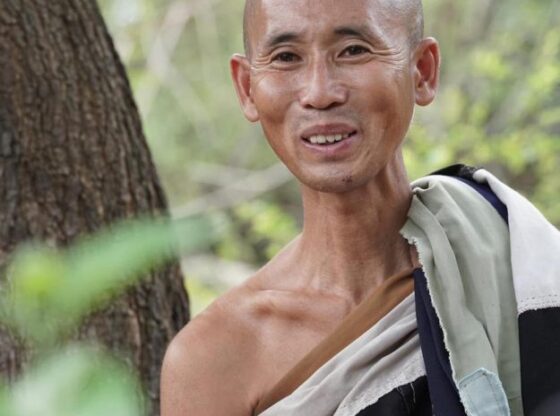

In the wake of the Covid pandemic, a solitary figure in patchwork robes began appearing across Vietnamese social media feeds, walking barefoot from city to city. When asked his destination, he simply replied that he was “following the Way of the Buddha.” This mendicant, calling himself Thich Minh Tue, has become a viral sensation—not through any teaching or monastery, but through the raw power of his example.
The phenomenon raises profound questions about the nature of spiritual authority in the digital age. Minh Tue’s distinctive appearance—a shorn scalp like a bhikshu, a robe stitched from tattered cloths, feet blackened from asphalt and grime—evokes the earliest Buddhist monks who owned nothing but their robes and alms bowl. Yet his fame spreads through TikToks and YouTube shorts, complete with sparkling filters and traditional music.
What draws crowds to tears? When Minh Tue speaks to young people about the buddhadharma, devotees listen with palms pressed reverently together. “This solitary mendicant has been seen traveling barefoot from city to city,” the subtitles explain. “When asked where he is going, he says he is following the Way of the Buddha.” He smiles, bows, and turns away—proceeding onward to the next city. In an age of spiritual consumerism, perhaps the most radical teaching is simply this: a life of complete renunciation, witnessed in real time.