
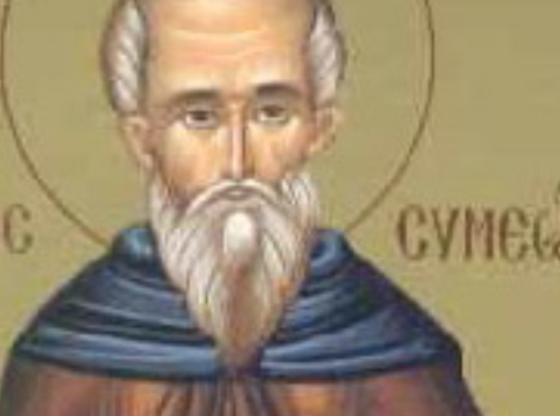

The Hidden Wisdom of Holy Foolishness: What Simeon and John Teach Us About Surrender
In the sixth century, two wealthy Syrian friends from Edessa discovered that true riches lie not in gold but in the abandonment of self-will. Saints Simeon and John, commemorated on July 21, undertook a pilgrimage to Jerusalem for the Feast of the Exaltation of the Cross—and never returned to their former lives. Their journey reveals a profound spiritual principle: the path to God often requires leaving behind not only possessions but also our carefully laid plans.
After venerating the Life-Creating Cross, the friends sent their servants and horses ahead, walking on foot through Jordan. There, beholding monasteries on the desert’s edge, they were seized by “an irrepressible desire to leave the world.” In a remarkable act of trust, they prayed for divine guidance and agreed to enter whichever monastery had its gates open. The Lord responded by revealing their intentions to Igumen Nikon in a dream, commanding him to open the gates for “the sheep of Christ.”
What makes this account spiritually instructive is not merely their renunciation, but Simeon’s later embrace of holy foolishness—a radical humility that confounds worldly wisdom. As the Orthodox tradition teaches, the fool-for-Christ dismantles the ego’s pretensions through seemingly irrational acts. Simeon’s path reminds us that salvation often requires the courage to appear foolish in the eyes of the world, trusting that God’s wisdom transcends human understanding.