
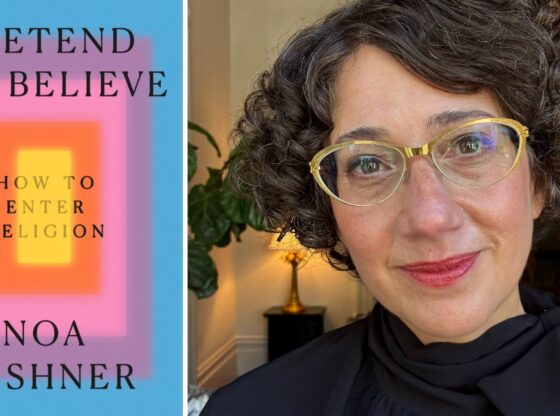

The Case Against Self-Improvement: A Rabbi’s Radical Invitation to Believe Without Certainty
For many modern believers, faith has become a transaction: attend services, gain community; observe rituals, become a better person. But Rabbi Noa Kushner’s new book, “Pretend You Believe: How to Enter Religion,” challenges this consumer approach to the sacred. Her provocative suggestion? Stop asking whether you believe in God. Instead, pretend you do—and see what unfolds.
Kushner’s concept of “chosen naivete” isn’t about faking it until you make it. It’s an invitation to bracket doubt long enough to encounter religion on its own terms. She writes that this practice can “make a dent in your unspoken assumption that religion is vapid, useless, at best decorative, and at worst dangerous and destructive.”
Her most radical claim cuts against contemporary spirituality’s grain: Judaism exists “for the sake of God. To have another end, even one as well regarded and critical as our ethical behavior, is to misunderstand the religious project and our role in it.”
For seekers weary of self-optimization, Kushner offers something stranger and more ancient—a tradition that asks not what it can do for you, but what you might become within it.