

Suffering as Grace: What One Family’s Trial Reveals About Redemptive Faith
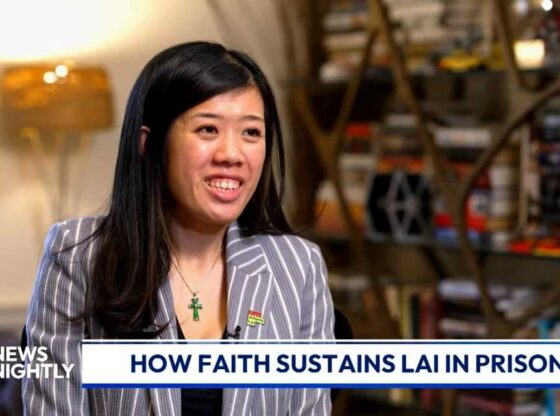
When Claire Lai disclosed her cancer diagnosis this September, she framed it not as tragedy but as inheritance. “Our Christian faith teaches — and my father bears witness — that suffering can be redemptive,” she said, referencing her father Jimmy Lai, the imprisoned Hong Kong Catholic activist. “Mine is but a fraction of my father’s, but I hope to bear it as a grace as well as he has.”
Her words echo a theological tradition stretching from the early martyrs through modern spiritual writers: that pain, freely accepted, can be transformed into something generative rather than merely endured. Claire, who will undergo treatment in the UK, described herself as “optimistic about the outcome” while expressing gratitude for her parents’ “example of perseverance.”
The Lai family’s witness raises a question for believers everywhere: how does one receive suffering without being defined by it? Claire’s answer — to bear it “as a grace” — suggests that redemption is not the absence of affliction but a way of moving through it, held by faith and sustained by hope.