
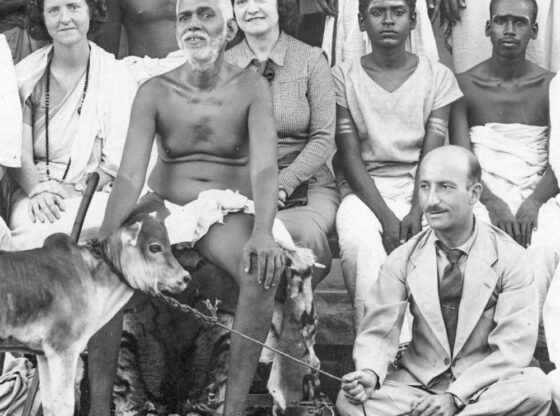

In a world saturated with noise, a single voice from the last century continues to echo with the stillness of the Upanishads. Paul Brunton, an English journalist turned spiritual scribe, did not merely write about India’s wisdom—he became a conduit for it. His journey, chronicled in best-selling books like A Search in Secret India, reveals a profound truth: the deepest spiritual teachings often arrive through those willing to listen, not just to sages, but to the silence between words. This is not the story of a man, but of a transmission—a rational bridge between the ancient East and the modern West.
What makes Brunton’s work endure is not his fame, but his method. He called it Mentalism: the radical assertion that space, time, and matter are appearances within consciousness, not the other way around. For seekers drowning in technique and experience, Brunton offered a lifeline—a rational inquiry into the nature of selfhood. He urged readers to look beyond yogic feats and mystical fireworks, directing them instead to the direct realization of what he termed the Overself, a universal consciousness beyond the personal ego. This is not a philosophy of belief, but of direct seeing, echoing the Advaita Vedanta of Ramana Maharshi, who once declared, “Paul Brunton is one of my eyes.”
The spiritual significance of Brunton’s work lies in its refusal to cling to dogma. Though he rarely quoted scriptures, his writing evokes the same stillness found in the mahavakyas—the great sayings of the Upanishads, such as tat tvam asi (“you are that”). He reframed ancient wisdom in Western philosophical terms, building a bridge between inner experience and modern understanding. In an age where spirituality is often commodified into techniques and experiences, Brunton reminds us that the ultimate goal is not accumulation, but recognition: the realization that the seeker and the sought are one. This is the timeless teaching of the sages, repackaged for a rational mind.
For the modern reader, Brunton’s legacy offers a crucial takeaway: silence is not empty, but full. The silence he listened to was not an absence of sound, but a presence of awareness. In his own words, “The Overself is not a thing to be acquired, but a truth to be realized.” This realization does not require a guru in the Himalayas or a decade of austerity—it requires a willingness to turn inward, to question the nature of perception itself. As we navigate a world of constant information, Brunton’s path invites us to stop searching for answers and instead become the silence that knows. In that stillness, the writer fades, and the Overself speaks.