

Seeds as Sacred Instruction: What the Portland Indigenous Food Summit Reveals About Spiritual Sovereignty
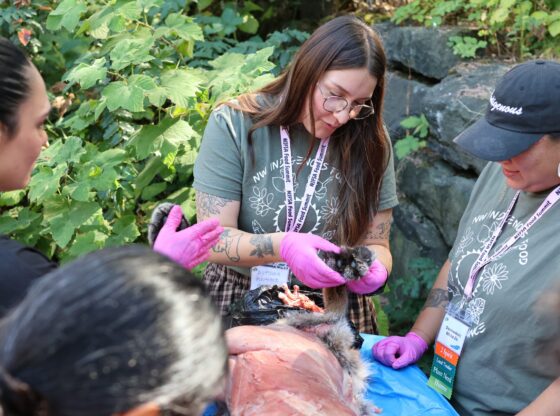
At the Native American Student and Community Center at Portland State University this September, just under 200 people gathered for the inaugural Indigenous Food Summit — not merely to discuss cuisine, but to practice what keynote speaker Nora Frank-Buckner, Nez Perce and Klamath, called “a connected food system.” For those attuned to spiritual wisdom, the two-day gathering offered a profound teaching: food sovereignty is not a political slogan but a sacred discipline, a way of remembering who we are.
“Our people have continued to carry the seeds, protect the knowledge, harvest the foods, and make place for one another,” Frank-Buckner told attendees. “Our responsibility now is to make sure future generations inherit not only that knowledge, but also the land, the resources, the relationships, and power to act on it.”
Workshops on wild foods preparation, tea blending, and first foods cookbooks became vehicles for something older than policy — the transmission of relationship. As Frank-Buckner put it, “Food sovereignty is how we remember who we are. It is how we take care of each other, and it is how we make sure future generations can set the table for themselves.”