
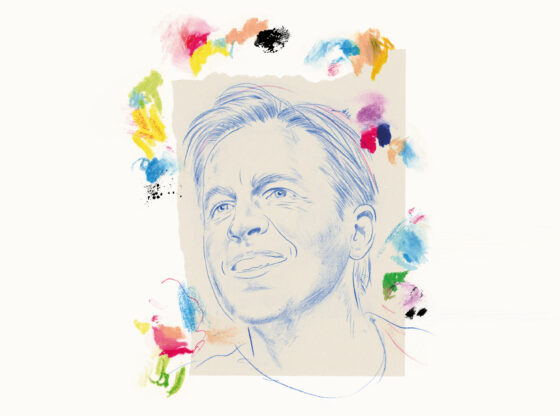

Former Nebraska Senator and college president Ben Sasse has been publicly wrestling with a profound spiritual question since his December pancreatic cancer diagnosis: How does one maintain belief in a benevolent Creator when facing a terminal illness? In a recent interview with Christianity Today, Sasse declared that he does not doubt God’s goodness, even as he confronts his own mortality. This stance, while deeply personal, echoes a timeless spiritual struggle found across wisdom traditions — the problem of suffering and the soul’s response to apparent divine silence.
Sasse’s public testimony, shared on platforms from The New York Times to 60 Minutes, reveals a man who has anchored his identity not in political power or earthly achievements but in an unshakeable trust in Christ. “I don’t doubt God’s goodness,” Sasse told CT contributor Haley Byrd Wilt. This declaration is not naive optimism but a hard-won conviction forged in the crucible of a diagnosis that would shatter many. For the spiritual seeker, Sasse’s example raises a critical question: What interior work allows a person to hold onto faith when life itself seems to betray them?
Across the world’s contemplative traditions, the response to suffering often hinges on the concept of surrender — not as defeat, but as a radical opening to a reality beyond the ego’s control. In Christian mysticism, figures like St. John of the Cross wrote of the “dark night of the soul,” a period of desolation that purifies faith. Similarly, in the Buddhist tradition, the First Noble Truth acknowledges that suffering (dukkha) is inherent to existence, and liberation comes not from avoiding pain but from transforming one’s relationship to it. Sasse’s refusal to question God’s goodness mirrors this ancient wisdom: he is not denying the reality of his cancer but refusing to let it define his ultimate trust in the divine order.
The deeper spiritual lesson here is that faith is not a feeling but a choice — a daily, sometimes hourly, reorientation of the will. Sasse’s public witness offers a template for those who may be wrestling with their own “test of faith.” It suggests that doubt about God’s goodness is not a failure of belief but a natural human response to chaos. What matters, the wisdom traditions teach, is what we do with that doubt. Do we let it corrode our hope, or do we, like Sasse, use it as a forge to strengthen our trust? For the reader, the takeaway is this: You do not need to have a perfect, untroubled faith. You need only to keep turning your face toward the light, even when the path is dark. Sasse’s story is a reminder that the truest faith is not the one that never questions, but the one that, in the face of the ultimate question, still whispers, “I trust.”