
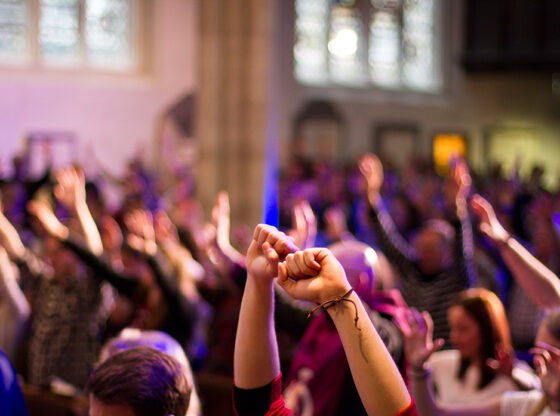

In a spiritual landscape often described as fragmented and declining, a new study has revealed a striking countercurrent: America’s megachurches—those Protestant congregations drawing 2,000 or more weekly attendees—now collectively host over 10 million worshipers every Sunday. According to the latest research from the Hartford Institute for Religion Research, these massive institutions have not only recovered from the COVID-19 lockdowns but have surged past pre-pandemic attendance levels, with the average megachurch now reporting 16% more weekly participants than in 2020. This phenomenon, while numerically impressive, raises profound questions about the nature of collective worship in a modern age.
The spiritual significance of this trend extends far beyond mere statistics. In an era where many lament the decline of communal religious practice, the megachurch model offers a powerful, if controversial, counter-narrative. These congregations represent less than 1% of all Protestant churches in the United States, yet they draw nearly 10% of all weekly churchgoers. This concentration suggests that seekers are not abandoning faith but are instead gravitating toward environments that offer scale, spectacle, and a sense of belonging. From a wisdom tradition perspective, this mirrors the ancient pattern of pilgrimage—where the journey to a large, central sanctuary becomes a symbol of collective devotion, as seen in the great temples of Jerusalem or the cathedrals of medieval Europe.
Yet, the deeper spiritual lesson may lie in what this growth reveals about the human soul’s hunger for connection. The Hartford study notes that megachurches are particularly adept at creating small-group experiences within their vast structures, offering intimacy amid the crowd. This reflects a universal truth found in mystical traditions: the One and the many are not opposed. As the Sufi poet Rumi wrote, “The lamps are different, but the Light is the same.” The megachurch, in its best expression, becomes a vessel for that light—a place where diverse individuals can unite in a shared encounter with the sacred. However, critics rightly caution against the dangers of institutional grandeur, reminding us that the Kingdom of Heaven is also found in the mustard seed, not only in the mighty cedar.
For the spiritual seeker, the takeaway is twofold. First, the resurgence of megachurches challenges the narrative that faith is dying; rather, it is transforming. Second, it invites discernment: Are we drawn to size for the sake of spectacle, or for the sake of service? The prophet Micah’s ancient call remains relevant: “What does the Lord require of you? To act justly, to love mercy, and to walk humbly with your God.” Whether in a congregation of 20 or 20,000, the measure of true worship is not the number of seats filled, but the depth of hearts transformed. As the Atlantean Tribune has long taught, the physical gathering is but a shadow of the eternal communion—a reminder that our ultimate belonging is not to any building, but to the Light that draws all souls home.