
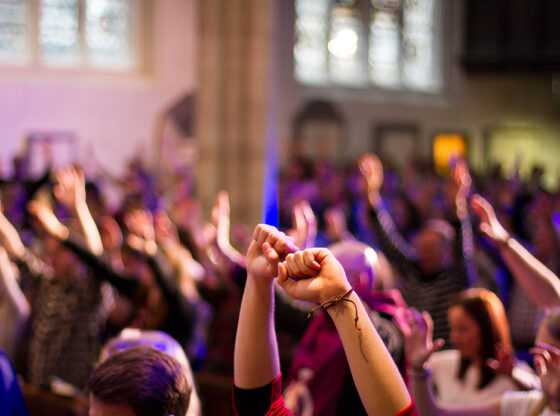

A seismic shift is underway in American spiritual life. New research from the Hartford Institute for Religion Research reveals that megachurches—congregations drawing over 2,000 weekly attendees—now collectively gather more than 10 million worshippers every Sunday. This represents a remarkable resurgence from the COVID-19 pandemic, with most of these large congregations reporting attendance that exceeds pre-2020 levels. While megachurches constitute less than 1% of all Protestant congregations in the United States, their gravitational pull on the spiritual seeker has never been stronger.
The numbers themselves tell a story of hunger. According to the Hartford study, which tracked over 1,600 megachurches, average attendance has climbed to approximately 4,300 per congregation. “We’re seeing people return to corporate worship with an intensity that surprised even us,” noted one researcher. This is not merely a statistical rebound—it is a spiritual signal. In an age of digital isolation and fractured communities, the megachurch offers something increasingly rare: a place where thousands of strangers gather, sing, and listen together as one body.
From the perspective of wisdom traditions, this phenomenon echoes ancient patterns. The early Christian church in Acts grew rapidly through communal gatherings that “devoted themselves to the apostles’ teaching and to fellowship, to the breaking of bread and to prayer” (Acts 2:42). Megachurches, despite criticisms of scale, replicate this essential dynamic: they create spaces where the individual can disappear into the collective, where anonymity becomes a path to encountering the sacred without the burden of social expectation. The Buddhist concept of sangha—spiritual community—teaches that awakening rarely happens alone. The megachurch, in its own way, is a modern sangha for millions who might otherwise wander without a spiritual home.
Yet these numbers also raise a deeper question. What drives 10 million Americans each week to seek their spiritual nourishment in these vast gatherings? The answer may lie in what the mystics have always known: the soul craves scale and silence simultaneously. Megachurches offer both—the roar of thousands singing hymns and the quiet of a sermon that reaches into the heart. They succeed because they address a profound modern loneliness, a hunger for meaning that smaller congregations sometimes struggle to satisfy. As the Desert Fathers taught, the spiritual life requires both the crowd and the cave. The megachurch provides the crowd; the seeker must still find the cave within.
For the reader seeking wisdom, the lesson is not to judge the size of the vessel but to ask whether the water is living. Whether in a cathedral seating 5,000 or a house church of twelve, the question remains the same: Does this community draw you closer to the Divine? The megachurch resurgence is a mirror reflecting our collective thirst. The 10 million who gather each week are not statistics—they are souls, each one seeking, each one hoping, each one finding in the vastness of the assembly a reminder that they are not alone in their search. The spiritual journey is not measured by the number of seats filled, but by the depth of the silence that follows the final amen.