
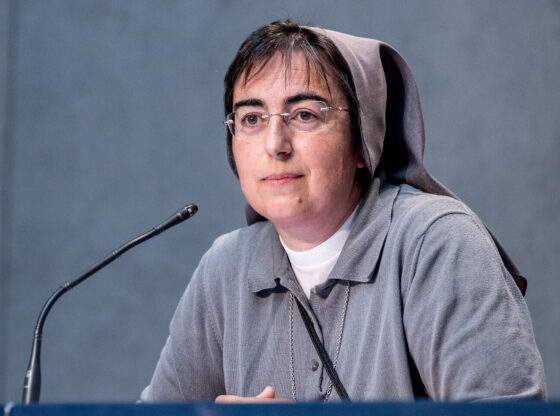

In a move that echoes through the marble corridors of Vatican City like a prayer answered in a new key, Pope Leo XIV has named Sister Alessandra Smerilli, a 51-year-old Salesian nun and economist, as the new prefect of the Dicastery for Promoting Integral Human Development. She succeeds Cardinal Michael Czerny, who will turn 80 in July. This is not merely a change of personnel; it is a shift in the spiritual architecture of how the Church understands human progress. Sister Smerilli, who has served as the dicastery’s secretary since 2021, now holds the reins of an office charged with translating the Gospel into the gritty realities of migration, ecology, and economic justice.
The appointment carries profound spiritual significance, particularly for those who seek wisdom in the intersection of faith and daily life. Sister Smerilli is a professor of political economy and statistics, a background that might seem dry to the mystic but is, in fact, a modern incarnation of the ancient virtue of prudence. The Dicastery for Promoting Integral Human Development is the institutional heart of Pope Francis’s vision, rooted in the encyclical Laudato Si’, which insists that care for creation and care for the poor are not separate duties but one seamless spiritual discipline. By placing a woman—and a religious sister—at its head, the Pope signals that the wisdom needed to heal a fractured world is not found in power alone, but in the attentive, nurturing intelligence that women have long brought to the Church’s margins.
This is not the first time a nun has broken the stained-glass ceiling. Sister Simona Brambilla was named prefect of the Dicastery for Religious Life earlier this year. Yet the appointment of Sister Smerilli, alongside Cardinal Fabio Baggio as pro-prefect, deepens the pattern. Baggio, a Scalabrinian cardinal who has worked extensively with migrants and refugees, brings a pastoral and administrative counterbalance. Together, they form a dyad that mirrors the early Church’s model of apostolic pairs—Barnabas and Paul, Priscilla and Aquila—where mission is shared, not monopolized. The spiritual lesson here is clear: leadership in the Kingdom of God is not about solitary authority but about complementary gifts. The economist nun and the migrant cardinal are two faces of one truth: that human development is neither charity nor policy, but the work of restoring the image of God in every person.
For the seeker of wisdom, this appointment is a living parable. Sister Smerilli helped organize the “Economy of Francesco” event, which calls young economists to build a more just global order. Her work echoes the ancient monastic tradition of the opus Dei—the work of God—which includes not only prayer but the careful stewardship of resources. In a world obsessed with growth at any cost, her presence at the Vatican’s development office is a quiet revolution. It says that the most radical spiritual act today is to insist that the economy serve life, not the other way around. The takeaway for the reader is simple yet challenging: integral human development begins not in Rome, but in the choices we make about what we buy, whom we welcome, and how we care for the earth. Sister Smerilli’s appointment is a reminder that the Church is not a museum of ancient truths but a living body, still learning, still listening, and still daring to place its trust in the hands of those who have long been told to wait. The waiting is over. The work begins anew.