
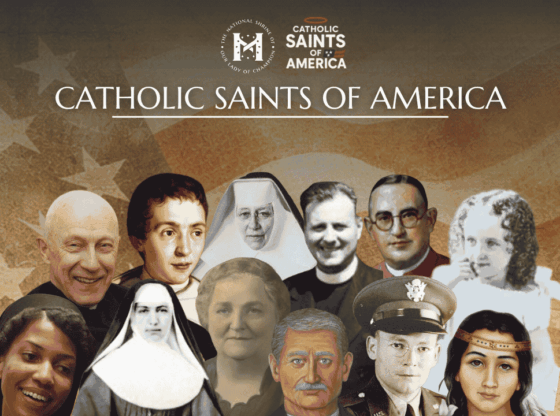

As the United States approaches the 250th anniversary of its founding, a quiet revolution is unfolding not in the halls of government, but on a patch of holy ground in rural Wisconsin. The National Shrine of Our Lady of Champion—the only approved Marian apparition site in America—is preparing to host an unprecedented gathering of sanctity. From July 1-9, the “Catholic Saints of America Exhibit” will bring together the stories and relics of 76 holy men and women with American ties, transforming a national celebration into a spiritual pilgrimage.
This is more than a museum display. It is a theological statement about what truly makes a nation great. The shrine’s rector, Father Tony Stephens, described the exhibit’s origin as something that “started small” and grew into “one of those things you know the Holy Spirit was driving.” The exhibit responds to a deep spiritual hunger in an age that has largely forgotten the language of holiness. While the secular world marks anniversaries with fireworks and political speeches, Champion invites Americans to contemplate souls who found their freedom not in political documents, but in surrender to divine grace.
The timing is deeply symbolic. The exhibit opens on July 1, the same day the shrine begins a Novena for Our Nation, and culminates with a special Mass on July 5 commemorating the death of Servant of God Adele Brice, the visionary to whom the Virgin Mary appeared in 1859. Brice, a Belgian immigrant who settled in the Wisconsin wilderness, received a message of conversion and prayer for the “hardened hearts” of the world. Her story echoes the spiritual DNA of America itself—a land of immigrants who brought their faith to a new continent and discovered that holiness transcends borders.
Wisdom traditions across the world recognize that nations, like individuals, have souls. The Catholic understanding of sanctity offers a radical counter-narrative to the myth of self-made success. Each of the 76 figures in the exhibit—saints, blesseds, venerables, and servants of God—represents a different path to holiness. Some were famous, others obscure. Some were born in America, others adopted it as their home. Together, they form a constellation of grace that reveals how divine love operates through human weakness. Their lives remind us that true patriotism is not about flags or political victories, but about building a civilization of love.
For the pilgrim or the armchair seeker, this exhibit offers a profound takeaway: holiness is the ultimate form of citizenship. In a fragmented age, the saints demonstrate that unity is possible—not through uniformity, but through a shared orientation toward the divine. Father Stephens noted that the idea for the exhibit arose as the shrine prepared for Adele Brice’s potential elevation to Servant of God. This is a reminder that sanctity is not a relic of the past; it is a living reality unfolding even now. As America celebrates its 250th year, the question posed by Champion is not “What have we achieved?” but “Who have we become?” The answer, written in the lives of the saints, is that we are most fully ourselves when we are most fully surrendered to God.