
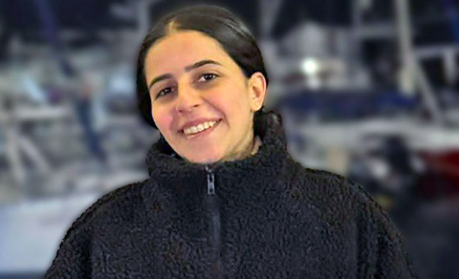

The arrest of Natalie Abu Dayyeh, a Palestinian Christian student from Birzeit University, has stirred more than political outrage among Anglican leaders—it has reopened a wound that cuts to the heart of Christian witness in the Holy Land. Four Anglican bishops have voiced their “deep dismay and disquiet” over her detention, which began on 2 June under allegations of “promoting terrorist activities.” Abu Dayyeh, a member of the Evangelical Lutheran Church in Jordan and the Holy Land, was reportedly subjected to a violent arrest alongside three other Palestinian women. Her case echoes that of Layan Nasir, another Palestinian Christian who endured repeated administrative detentions without charge between 2021 and 2025. For the global Church, these events are not merely political crises; they are spiritual tests of solidarity and truth-telling.
Why does this matter spiritually? Because the Christian tradition has always understood that faith is lived not in abstraction but in the particularities of place and power. The Apostle Paul reminded the early church that “we wrestle not against flesh and blood, but against principalities and powers” (Ephesians 6:12). In the West Bank, that wrestling takes the form of administrative detention—a practice that holds individuals indefinitely without trial or charge. Bishop Imad Haddad of the Evangelical Lutheran Church described the church as “deeply shocked and horrified” that Abu Dayyeh’s family did not immediately know where she had been taken. This hiddenness, this invisibility, is a spiritual violence that denies the God-given dignity of every human being made in the divine image (Genesis 1:27). The bishops’ protest is therefore a prophetic act, calling attention to a system that silences the voiceless and shadows the light of justice.
Deeper context from wisdom traditions reminds us that the early Christian community itself knew persecution and unjust imprisonment. The Book of Acts recounts how Peter and John were arrested for preaching the resurrection (Acts 4:3), and Paul and Silas were thrown into prison without trial (Acts 16:23-24). Yet these imprisonments became moments of testimony—places where hymns were sung and chains were broken. The desert fathers and mothers, who fled to the wilderness to seek God, also understood that earthly powers could not contain the freedom of the soul. Today, Palestinian Christians like Abu Dayyeh and Nasir embody this ancient witness. They are not political pawns but living icons of a faith that refuses to be cowed by fear. As Bishop Haddad noted, “Palestinian civilians, including women and children, suffer deep injustice in Israeli military detention and are often held for months or years with no explanation.” This silence is a spiritual crisis that demands a response from every believer who claims to follow the One who said, “I was in prison and you visited me” (Matthew 25:36).
The takeaway for the reader is a call to active prayer and advocacy. The Anglican bishops have urged Christians worldwide to “advocate for them”—not as a political gesture, but as a spiritual discipline. In a world where justice is often obscured by power, the faithful are called to be witnesses to the truth. This means learning the names of the imprisoned, praying for their release, and speaking out against systems that deny due process. It also means recognizing that the Holy Land is not a museum of ancient faith but a living landscape where Christians today bear the cross of occupation. To ignore their plight is to ignore the Body of Christ in its suffering. As the psalmist cries, “How long, O Lord, will the wicked triumph?” (Psalm 94:3). The answer begins with those who refuse to look away. Let us join the bishops in their protest, not with anger alone, but with the relentless hope that justice will roll down like waters (Amos 5:24).