
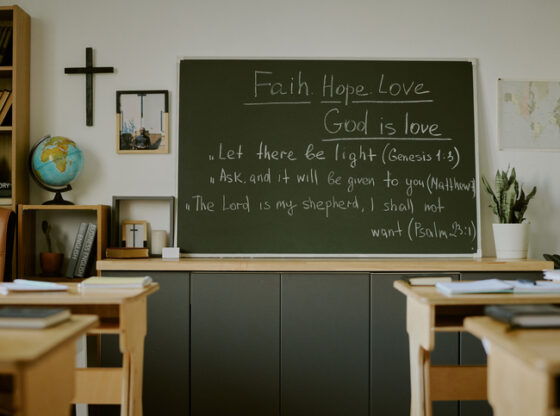

In an era where secularism often dominates public discourse, a quiet revolution is stirring among Christian communities in the United Kingdom. Niel Deepnarain, founder of the Unite for Education campaign, has issued a clarion call for believers to reclaim their voice in educational matters. Speaking to Christian Today, Deepnarain asserted that “Christians must be willing to engage publicly with educational issues rather than remain silent.” This appeal comes as many faith-based schools face increasing pressure to conform to secular curricula, and as Christian parents struggle to find educational environments that nurture both mind and spirit.
The spiritual significance of this campaign cannot be overstated. Education, in the Christian tradition, is not merely the transmission of facts but the formation of souls. From the ancient monastic schools of Ireland to the cathedral schools of medieval Europe, the Church has long understood that learning is inseparable from worship. When Christians withdraw from educational debates, they risk abandoning one of the most formative arenas of human life to forces that may not share their commitment to truth, beauty, and the dignity of every child made in God’s image. Deepnarain’s call is a reminder that silence is not neutrality—it is a choice with consequences.
This tension echoes throughout wisdom traditions. The Jewish concept of chinuch (education) holds that teaching is a form of creation, shaping the moral and spiritual fabric of the next generation. Similarly, the Hindu guru-shishya tradition emphasizes that true knowledge is transformative, not merely informational. In the Christian context, Jesus himself was called “Rabbi” or Teacher, and his parables were pedagogical tools designed to awaken hearts and minds. The early Church Fathers, from Augustine to Jerome, devoted immense energy to crafting curricula that integrated faith with learning. To disengage from education is to forget that the Great Commission includes not only evangelism but also the teaching of “all that I have commanded you” (Matthew 28:20).
For the spiritual seeker, the takeaway is both practical and profound. Deepnarain’s campaign invites every believer to consider: What kind of education are we supporting, whether through our choices, our prayers, or our advocacy? Are we entrusting the formation of young souls to institutions that honor their whole being—body, mind, and spirit? The call is not merely to defend Christian schools but to engage creatively and courageously in shaping educational policies that reflect the full breadth of human dignity. As the early Christian writer Tertullian once asked, “What has Athens to do with Jerusalem?” The answer, for those who follow Christ, is everything—for all truth is God’s truth, and every classroom is a potential sanctuary of grace.