
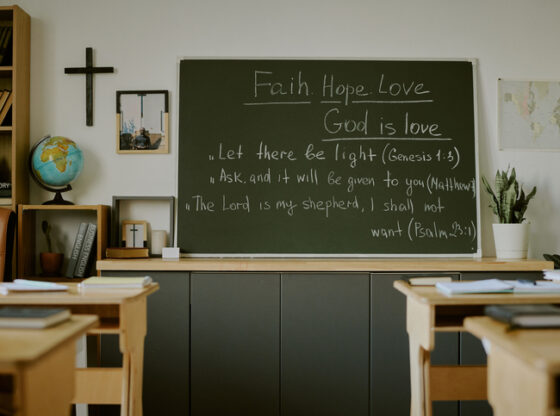

In a world where secular voices often dominate public discourse, a new campaign is urging Christians to reclaim their role in shaping education. Unite for Education, founded by Niel Deepnarain, has launched a call to action for greater support for Christian education. Rather than retreating from the public square, Deepnarain argues that believers must engage boldly with educational issues, ensuring that faith-based perspectives are not silenced in schools and universities. “Christians must be willing to engage publicly with educational issues rather than remain silent,” he stated, emphasizing that the spiritual formation of the next generation hangs in the balance.
This movement emerges at a critical juncture. Across the Western world, Christian educational institutions face mounting pressure to conform to secular ideologies, from curriculum content to moral teachings. The campaign highlights a deeper spiritual crisis: the erosion of a worldview that sees education as a holistic formation of the soul, not merely the transfer of information. For centuries, Christian traditions have upheld the belief that all truth is God’s truth, and that learning is a sacred act of worship. Yet today, many schools and universities treat faith as a private matter, irrelevant to the public pursuit of knowledge. Unite for Education seeks to reverse this trend, reminding believers that their voice is essential in debates over what children learn and how they are shaped.
From a wisdom tradition perspective, this call echoes ancient teachings about the integration of faith and learning. The Book of Proverbs declares, “The fear of the Lord is the beginning of knowledge” (Proverbs 1:7), suggesting that true education cannot be divorced from reverence for the divine. In the early church, figures like Augustine of Hippo argued that all learning should be oriented toward God, with the liberal arts serving as tools for understanding Scripture and creation. Similarly, the monastic tradition preserved classical knowledge through the Dark Ages, viewing education as a means of cultivating virtue and wisdom. Today, Christian educators face a similar challenge: to defend a vision of learning that nurtures the whole person—mind, heart, and spirit—against a culture that often reduces education to mere career training.
For the reader, the takeaway is both personal and communal. Spiritually, this campaign invites you to examine your own engagement with education. Are you praying for teachers and administrators? Are you supporting Christian schools or homeschooling networks? Are you speaking up in local school board meetings or university forums? Deepnarain’s message is clear: silence is not an option. The future of Christian witness depends on a generation that can think deeply, argue winsomely, and live faithfully in every sphere of life. As the apostle Paul wrote, “Do not be conformed to this world, but be transformed by the renewing of your mind” (Romans 12:2). Education is a primary arena for that renewal. Let this be a call to action—not out of fear, but out of a confident hope that the light of Christ can illuminate even the darkest classroom.