
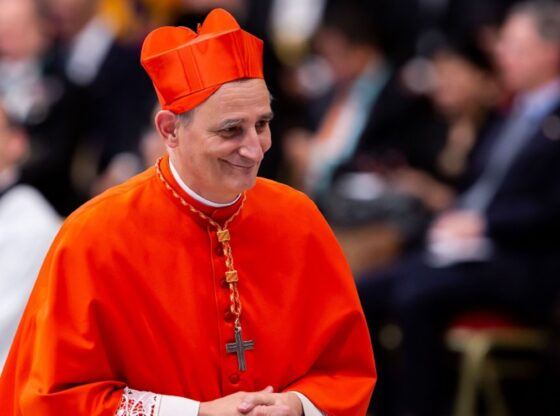

In a ceremony that transcended mere political protocol, representatives of Italy’s major religious traditions—Catholic, Jewish, Muslim, Buddhist, Hindu, Baha’i, Orthodox, and evangelical—gathered in Rome on June 25 to sign a historic pact of dialogue and coexistence. The document, titled “The Italian Path of Dialogue: Religions in the Public Sphere and for Social Cohesion,” was not simply a diplomatic gesture. It was a public acknowledgment that in a postmodern, secularized society, the spiritual voice must still speak, and must do so not in isolation, but in chorus. The leaders were later received at the Quirinal Palace by President Sergio Mattarella, who accepted a copy of the agreement, symbolizing the state’s recognition that religious communities are not private clubs but vital organs of the national body.
This event is not merely news; it is a spiritual signpost. In an age where extremism and polarization often wear the mask of religion, the pact offers a counter-narrative: that faith, at its deepest root, is not a weapon but a wellspring of compassion and justice. The document explicitly names the wounds of “conflicts and extremism, including those of a pseudo-religious nature.” By doing so, the signatories are not ignoring the shadow side of religion—they are naming it, and in so doing, they are reclaiming the sacred from its hijackers. For the seeker of wisdom, this is a profound lesson: true spirituality does not flee from the world’s brokenness but enters into dialogue with it, offering a path of healing rather than division.
The deeper context here draws from the ancient wisdom of the Italian soil itself—a land that has known both the unity of the Roman Empire and the fractures of countless wars. In the Christian tradition, the act of covenant-making has always been a sacred gesture, from the Old Testament covenants to the monastic vows of peace. In Buddhism, the principle of sangha—harmonious community—reminds us that enlightenment is not a solitary pursuit but a collective awakening. Cardinal Matteo Zuppi, president of the Italian Bishops’ Conference, captured this when he spoke of “shared values in order to build a civil community that, even amid diversity, recognizes the sense of a shared commitment to a more just, welcoming, and inclusive society.” This is not a dilution of faith but its fullest expression: the recognition that the Divine is found not in the fortress of certainty but in the vulnerability of encounter.
For the reader seeking spiritual nourishment, the takeaway is both simple and profound. The pact proposes nine commitments, including the promotion of equality before the state, the fostering of a culture of peace, and the defense of the common good. These are not abstract ideals but practical disciplines for the soul. In your own life, you are invited to become a “signatory” to a similar covenant: to listen before speaking, to seek understanding before judgment, and to recognize that your neighbor’s faith—however different—is a window into the same infinite Mystery that calls you by name. As the Italian leaders have shown, the path to peace is not found in uniformity but in the courageous art of dialogue. The pen has been lifted; the ink is still wet. The question now is whether we, in our own hearts, will sign.