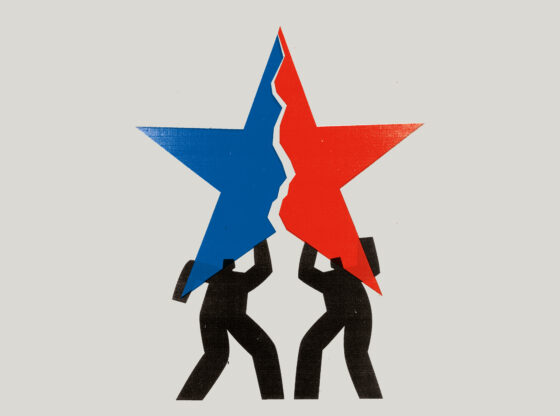

In a recent reflection on the grand American experiment, political commentator Justin Giboney reminds us that the nation’s achievements—from jazz to blood banks to the light bulb—are not the product of any single group. Instead, they emerge from an extraordinary, often painful collaboration. For the spiritual seeker, this observation is not merely historical; it is a profound meditation on the nature of unity, sacrifice, and divine purpose. The American story, in its highest and lowest moments, becomes a living parable about how the Creator weaves light from the threads of human brokenness.
Giboney’s key insight is that “no one group can credibly claim responsibility for our nation’s accomplishments.” This cuts against the grain of both nationalist pride and identity-based grievance. From a spiritual perspective, it echoes the ancient wisdom of the Body of Christ found in 1 Corinthians 12—where the eye cannot say to the hand, “I have no need of you.” The grand experiment of America, like the spiritual community itself, is a mosaic of gifts and burdens. The light bulb shines because of the labor of enslaved hands, the genius of immigrant minds, and the capital of industrialists. To claim sole credit is to deny the interdependence that is the very fabric of creation.
Yet the article does not shy away from the shadow: “not all the contributions were voluntary, rightfully attributed, or justly compensated.” This is the crucifixion within the resurrection story. The spiritual tradition has always taught that transformation comes through suffering. The blues, born from the pain of oppression, gave birth to jazz—a music that embodies improvisation, call-and-response, and the resilience of the human spirit. Similarly, the blood bank, a life-saving innovation, was perfected by Dr. Charles Drew, an African American scientist whose own blood was segregated by the very system he helped serve. These are not contradictions to be resolved but mysteries to be held—much like the paradox of the cross.
For the reader seeking wisdom, the takeaway is clear: we are stewards of a shared inheritance, not owners. The American experiment, like the spiritual journey itself, is not about arriving at a perfect state but about working out our salvation—and our nationhood—with fear and trembling. It calls us to humility, gratitude, and a willingness to see the divine image in those who built what we now enjoy. As Giboney implies, the grand experiment is not finished. It is a living prayer, requiring our repentance, our cooperation, and our hope that from the ashes of injustice, a more beautiful symphony may yet arise.
Ultimately, the lesson for the spiritual journalist is this: the nation’s history is a sacred text, written in blood and brilliance. To read it rightly is to see not a story of self-congratulation but a call to communion. The light bulb does not shine for itself; it shines for the house. And the house is built by many hands, some free, some bound, but all held in the hand of the One who makes all things new.