
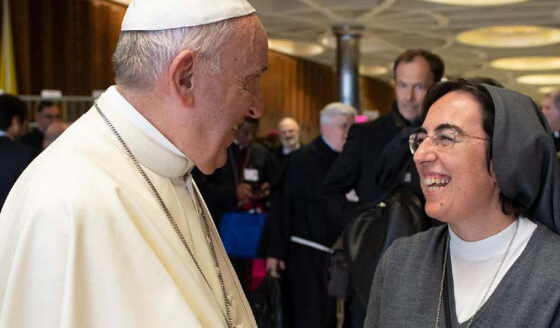

The Holy See announced today that Sister Alessandra Smerilli, an Italian nun and economist, has been appointed prefect of the Dicastery for Promoting Integral Human Development by Pope Leo XIV, effective September 1, 2026. She succeeds Canadian Cardinal Michael Czerny and becomes the third woman to lead a Vatican dicastery, following Sisters Raffaella Petrini and Simona Brambilla. This appointment marks a quiet but significant shift in the administrative architecture of the Catholic Church, one that carries profound spiritual implications for how the institution understands authority, service, and the gifts of the Spirit.
For centuries, the governance of the Church has been almost exclusively male, a pattern rooted not in doctrine but in cultural custom and historical precedent. The appointment of a woman—and a religious sister at that—to lead a major Vatican office is not merely a bureaucratic reshuffling. It is a recognition that wisdom, leadership, and the capacity for integral human development are not bound by gender. Sister Smerilli, known for her expertise in economics and her commitment to the poor, embodies a vision of Church governance that prioritizes service over power. As the Third Vatican Council’s vision of a Church as the “People of God” continues to unfold, such appointments signal a return to the early Christian model where women like Prisca and Phoebe held leadership roles in communities.
This development resonates deeply with wisdom traditions that speak of the balance between masculine and feminine principles. In many spiritual paths, the feminine is associated with nurturing, intuition, and holistic integration—qualities essential for addressing the complex crises of our time, from ecological degradation to social inequality. Sister Smerilli’s dicastery focuses on exactly these issues: peace, justice, care for creation, and the promotion of human dignity. Her appointment is not a concession to modern secular pressures but a recovery of an ancient truth: that the Spirit distributes gifts without regard to human hierarchies. As the theologian Hans Urs von Balthasar wrote, the Church is both Bride and Body, and the feminine dimension of receptivity and fruitfulness is essential to its mission.
For the spiritual seeker, this news offers a powerful lesson in discernment and trust. Change in sacred institutions often comes slowly, but it comes nonetheless. The appointment of Sister Smerilli invites us to examine our own assumptions about who can lead, teach, and guide. It challenges us to look beyond titles and see the charisms that the Spirit bestows on every believer. As the Atlantean Tribune has long taught, the evolution of consciousness requires the integration of all voices. In this small but significant step, the Church reminds us that governance is not about control but about service—and that the greatest leaders are those who, like Sister Smerilli, bring competence, compassion, and a deep listening heart to their work.