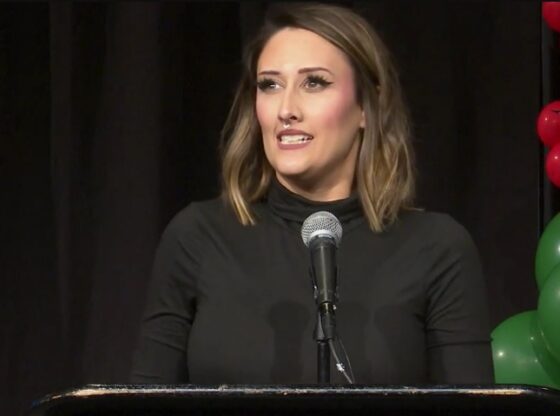

In the Dallas-Fort Worth area, a controversy has erupted that reveals the deep spiritual tensions within modern education. A newly appointed assistant principal in the Carrollton-Farmers Branch Independent School District reportedly also works as a drag performer, prompting Texas State Board of Education member Pat Hardy to call for a formal investigation. The administrator, who had previously worked as a teacher in the district, was promoted to the role of assistant principal at a middle school earlier this month. Hardy, a Republican board member, expressed concerns about the “appropriateness” of such a dual identity in a public school setting, particularly one serving children as young as 11 years old.
At its core, this is not merely a debate about employment policies or personal expression. It is a spiritual question about the nature of identity, the formation of the young, and the role of communal institutions in shaping the soul. Throughout the wisdom traditions, the idea of “becoming” has always been sacred. The ancient sages taught that childhood is a time for rooting, for grounding in a stable sense of self before the winds of the world begin to blow. The Hindu tradition speaks of the *ashramas*—stages of life—where the first stage is that of the student, dedicated to learning discipline and virtue. Similarly, in the Jewish tradition, the *chinuch* (education) of a child is considered a holy duty, one that requires adults to present themselves as models of integrity and coherence.
The deeper spiritual issue here is the confusion between the sacred theatre of ritual and the secular theatre of self-invention. In Christianity, the concept of *metanoia*—a radical transformation of the heart—is central. But this transformation is inward, not a mere change of costume. St. Paul wrote of being “transformed by the renewing of your mind,” a process that demands authenticity, not performance. The drag performance, by its very nature, is a deliberate act of theatrical identity-switching. While this may be harmless entertainment in an adult context, the question for spiritual discernment is whether such a public, professional display of fluid identity is appropriate for those tasked with the formation of children. The school board member’s call for investigation reflects a profound instinct that the classroom is not a stage, and the principal is not a performer.
For the reader seeking wisdom, this moment invites a deeper reflection on the boundaries between public roles and private lives. The ancient Greek philosopher Plato warned in *The Republic* that the guardians of the city must be models of virtue, because the young learn by imitation. Today, we might ask: what does it mean to be a “guardian” of children? The spiritual takeaway is not about judging one individual’s choices, but about recognizing that every adult in a position of authority over the young carries a sacred responsibility. We must ask ourselves whether our own lives reflect an integrity that can be safely imitated. The school board’s investigation will proceed; but the deeper inquiry belongs to each of us, in the quiet of our own conscience.