
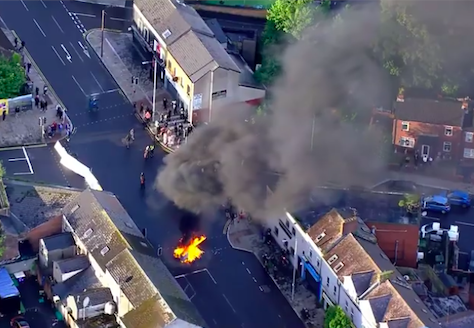

The ancient streets of Belfast, a city whose very stones have absorbed centuries of prayer and protest, trembled once more under the weight of communal anguish. Local church leaders have publicly declared themselves “heartbroken” following another night of unrest, ignited by a brutal knife attack that has torn at the fragile fabric of peace. Where hymns once echoed from spires, the sounds of shattered glass and angry shouts now fill the air. This is not merely a political crisis—it is a spiritual wound, a rupture in the soul of a community that has long sought the balm of reconciliation.
In the Christian tradition, the heartbreak expressed by these church leaders carries profound theological weight. The prophet Jeremiah wept over Jerusalem, crying, “Is it nothing to you, all you who pass by?” (Lamentations 1:12). Similarly, Belfast’s churches are not distant observers but participants in a lament that transcends denomination. Their grief is a sacred act, acknowledging that violence is not just a failure of policy but a fracture in the divine image shared by all humanity. The unrest, sparked by a knife attack, reveals how quickly the thin veil of civility can be torn, exposing the raw, unhealed wounds of historical division.
Spiritually, this moment echoes the wisdom of the Desert Fathers, who taught that a city’s peace is inseparable from the inner peace of its inhabitants. Saint Augustine, in his “City of God,” distinguished between the earthly city, built on self-love, and the heavenly city, founded on love of God. Belfast’s unrest is a stark reminder that without spiritual transformation—without the hard work of forgiveness and the humility to listen—the earthly city will always descend into chaos. The churches’ prayers are not escape; they are the first step in rebuilding the inner walls of compassion that must undergird any outer peace.
For the seeker of wisdom, the takeaway is this: the heartbreak of Belfast is a mirror held up to every community. Wherever we live, the seeds of division lie dormant, waiting for a spark. True peace is not the absence of conflict but the presence of justice, grounded in the recognition that every person is a sacred vessel. As the churches pray, they invite us to join them—not in despair, but in the active hope that lament can become the soil for resurrection. The city weeps, but the Spirit groans with it, and in that groaning, new life stirs beneath the rubble.