
When the Runway Becomes a Prayer: What Indigenous Fashion Week Reveals About Sacred Adornment
For many traditions, what we wear is not decoration but declaration — a visible prayer, a record of kinship, a statement of survival. That understanding was on full display as Indigenous New York Fashion Week returned for its second year, hosted at the American Indian Community House in Manhattan’s Garment District.
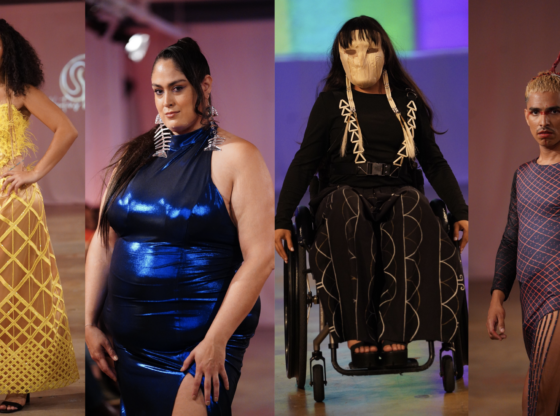
The event made history as the first Indigenous-produced gathering listed on the official New York Fashion Week calendar. More than 100 models, an entirely Indigenous-led production team, and performers from many nations filled sold-out shows across six themes: Contemporary Culture, Emerging Voice, Knowledge Keepers, Thought Leaders, Luxury and Couture.
Designs carried forward beadwork, quillwork, and ribbonwork — techniques that have long functioned as spiritual archives, encoding lineage, ceremony, and prayer in every stitch. “Indigenous New York Fashion Week in New York City was more than a celebration of fashion — it was a celebration of Indigenous culture, creativity, identity, and community,” said Patricia Tarrant, executive director of the American Indian Community House, a space serving Indigenous people in the city since 1969.
For seekers, the lesson is ancient: adornment can be devotion, and beauty can be a form of remembrance.