

When the Center Cannot Hold: What the Nairobi-Cairo Proposals Reveal About Communion and Authority
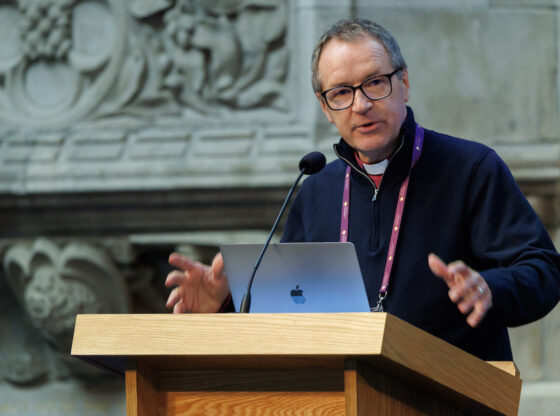
The Anglican Consultative Council’s current deliberations in Belfast mark a moment of profound spiritual reckoning. At the heart of the Nairobi-Cairo proposals lies not merely a question of governance, but a deeper inquiry into the nature of unity itself. For centuries, the Archbishop of Canterbury has served as what the tradition calls “a focus for unity”—a living symbol of connection across provinces. Yet the proposed shift toward shared leadership suggests a community wrestling with the difference between unity and uniformity.
“We want to remain in communion with one another,” the Rev. Anastasia Huntley of the Anglican Church of Southern Africa told fellow members during discussion. “We are a family, and families can fight and families can have disagreements and have all those spats, but [that] doesn’t break the family.” Her words echo an ancient spiritual truth: that authentic communion is forged not in the absence of tension, but in the willingness to remain together through it.
The proposals invite the Communion to consider whether institutional structures can ever fully contain the mystery of spiritual kinship. When the center shifts, what remains is the question every generation of believers must answer: What binds us when our structures fail to hold us? The answer, for those with eyes to see, has never been a single office or document, but the Spirit moving through relationships willing to endure disagreement for the sake of love.