

When Silence Speaks: The Hidden Spirituality of Deep Listening
In an age of constant digital noise, the practice of genuine conversation has become a rare spiritual discipline. Yet the late humanistic psychologist Friedemann Schulz von Thun, whose life’s work centered on the art of talking, understood something profound: authentic communication is not merely a social skill but a path toward awakening.
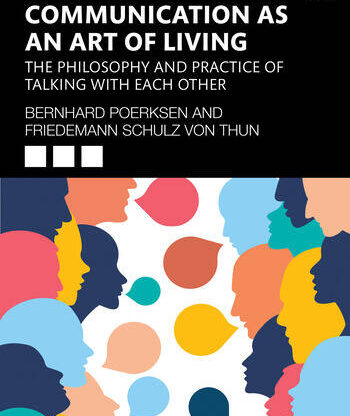
Schulz von Thun’s communication psychology, explored in the dialogic book Communication as an Art of Living, reveals an implicit spirituality that mirrors the Buddhist understanding of impermanence. Without employing traditional religious vocabulary, he recognized that the root of human suffering often lies in our failure to truly hear one another—and that the remedy is presence, not technique.
His approach echoes a striking pattern among humanistic psychology’s pioneers. Carl Rogers spoke of “mysterious dimensions” beyond the objective universe; Fritz Perls turned to Zen; Roberto Assagioli embraced Theosophy. These thinkers discovered that the examined life inevitably leads to the contemplative one.
Schulz von Thun’s insight offers modern seekers a simple yet radical teaching: every conversation is an opportunity to practice non-attachment—to let go of being right, to release the need to control, and to meet another being in the sacred space of mutual vulnerability. In this way, the humble act of listening becomes a meditation, and the mundane exchange of words becomes a doorway to the divine.