
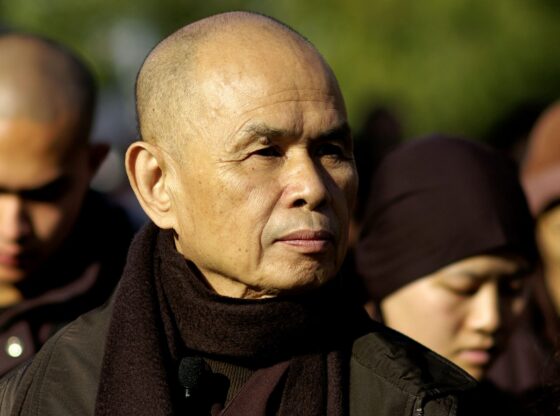

The Alchemy of Engaged Compassion
On the centennial of Thich Nhat Hanh’s birth, we move beyond personal nostalgia to examine his radical redefinition of spiritual practice. Known as Thầy, he did not merely teach meditation; he engineered a bridge between inner peace and outer justice. His concept of “engaged Buddhism” challenged the notion that enlightenment requires withdrawal from suffering. Instead, he posited that clarity of purpose is most vital when all seems lost.
Adrienne Minh-Châu Lê reflects on this legacy for those living in the wake of war, noting that Nhat Hanh proved “healing is possible—and that in healing ourselves, we end cycles of violence.” This is not passive spirituality but active alchemy. He sought not reverence, but to reveal the teacher within each student. By cutting through rigid views with compassion, he offered a path where mindfulness serves as a tool for social transformation. His life reminds us that true wisdom is measured by its capacity to bring light to humanity amidst chaos, turning personal healing into collective liberation.