
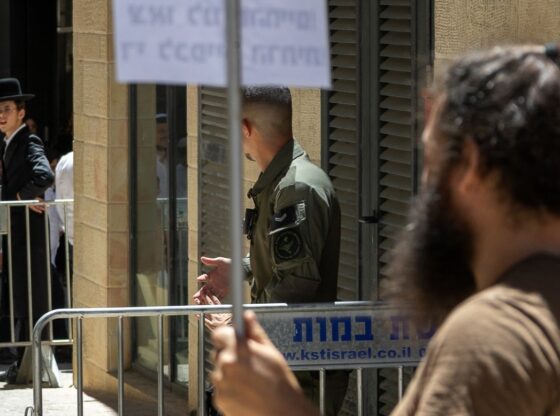

When Shabbat Coffee Becomes a Test of Faith: The Spiritual Crossroads Hidden in Jerusalem’s Cafe Uproar
In the tangled streets of Jerusalem, a simple cup of coffee has become a mirror reflecting the soul of a city torn between sacred tradition and secular longing. What began as a culture war over a cafe open on Shabbat has deepened into a far more profound spiritual dilemma: Can a community stand for freedom of conscience when that freedom serves a mission it rejects?
Cafe Basimta, now revealed as a project of Jews for Jesus, drew crowds of secular Israelis eager to defy haredi Orthodox protesters demanding it close on the Sabbath. But when Hapoel Jerusalem soccer club withdrew its sponsorship after learning of the cafe’s missionary ties, the battle lines blurred. “Our original intention was simply to support a small business,” club spokesperson Matan Avrina told JTA, “but this story is more complex than we initially knew.”
Deputy Mayor Adir Schwartz, a secular advocate, acknowledged the tension: “I understand they hate Jews for Jesus, and I understand what they hate them for.” Yet he still defends the cafe’s right to operate. For many, the question is no longer about coffee or commerce—it is about whether the fight for pluralism can survive when it inadvertently aids a movement many Jews view as a spiritual threat.
As one American student, Gabriel, put it while waiting in line amid protesters: “It’s one layer deeper than I thought.” In Jerusalem, every sip now carries a question of faith.