
When Political Rhetoric Becomes a Spiritual Contagion: What the Mamdani Speech Teaches Us About the Words We Carry
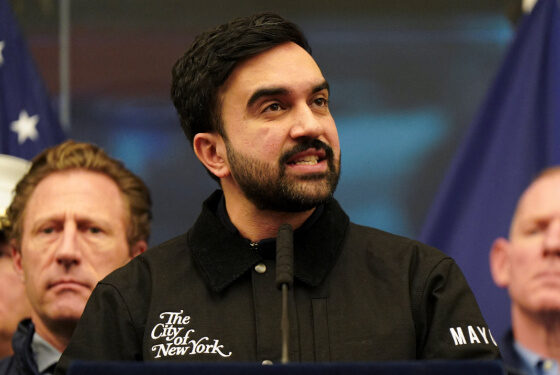
In the quiet aftermath of New York City Mayor Zohran Mamdani’s June 18 address at Brooklyn’s Kings Theatre, a different kind of storm has been charted — not of political outrage, but of linguistic transmission. Mamdani characterized AIPAC as one of the “monsters” New Yorkers face, accusing it of moving “millions in dark money” to “turn us against one another.” Yet for those seeking wisdom, the question is not whether the mayor intended harm, but what happens when certain words leave a speaker’s lips and take on a life of their own.
Researchers at NYU’s Center for the Study of Antisemitism analyzed 2,396 audience comments across 24 platforms and found a striking asymmetry: two specific phrases from the speech were eagerly reproduced by audiences, while two others were ignored entirely. This is not merely a data point — it is a spiritual lesson in the power of speech. In the wisdom traditions, words are never neutral; they are seeds planted in the soil of collective consciousness. When a phrase like “dark money” or “monsters” is taken up and echoed across a community, it reveals not the speaker’s intention, but the audience’s readiness to receive a certain kind of story.
The ancient sages taught that we are responsible not only for what we say, but for what we allow to grow from our words. The Mamdani case reminds us that the most dangerous rhetoric is not always the most obviously hateful — it is the phrase that finds a ready home in hearts already inclined toward suspicion. True spiritual discernment asks us to examine not just the speaker, but the listener within ourselves.