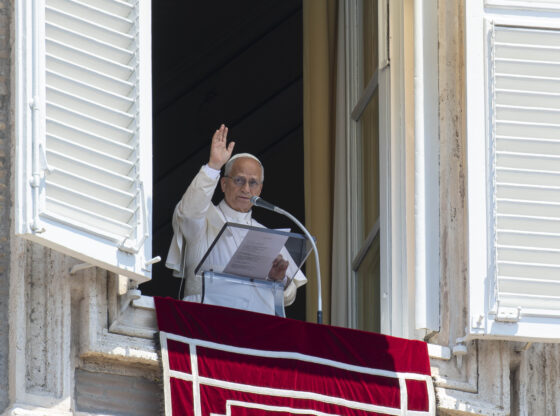

On a sunlit Sunday in St. Peter’s Square, Pope Leo XIV did something that might seem counterintuitive in a moment of crisis. After offering heartfelt prayers for the victims of Venezuela’s devastating earthquakes—expressing solidarity with “our Venezuelan brothers and sisters affected by the recent earthquakes, which have caused numerous deaths and injuries”—he turned to a Gospel passage about leaving father and mother behind. The juxtaposition was not accidental. It was a spiritual lesson hidden in plain sight: that the deepest comfort comes not from clinging to what is shaken, but from learning to let go.
The pope’s words for Venezuela were clear and compassionate. “Praying to the Lord for the eternal rest of the deceased, I renew my spiritual solidarity with their families, the injured, and all who have been shaken by this tragedy,” he said, adding gratitude for rescue workers. But then, in his Angelus reflection on Matthew 10:37–42, he shifted to a teaching on detachment. “When the Lord begins to send his apostles on mission, he wants them to be free from any ties,” Pope Leo explained. This is not coldness. It is the ancient wisdom that what we love most can become what binds us most—and that true love requires a kind of holy freedom.
Across spiritual traditions, the ground beneath our feet is a metaphor for certainty. Earthquakes, whether literal or metaphorical, remind us that no foundation is permanent. The pope’s teaching on detachment echoes the Buddhist concept of non-attachment, the Hindu practice of vairagya, and the Sufi understanding of tawakkul—trust in the Divine. Jesus himself said, “Whoever loves father or mother more than me is not worthy of me.” This is not a rejection of family, but a reordering of love. Pope Leo clarified this by pointing to married life: “It can only be lived fully by ‘leaving’ one’s parents’ home in order to commit to the life of marriage.” In other words, detachment is not the absence of love, but its purification.
For those watching from afar, the tragedy in Venezuela is a call to both action and contemplation. The pope modeled this duality: he prayed for the dead, encouraged the living, and then invited the faithful to examine their own attachments. The takeaway is not that we should love less, but that we should love so deeply that we are willing to release even our most cherished ties into the hands of God. As the pope reflected, “Even the most significant relationships find their fullness through the love that Christ gives us.” When the earth trembles, the only unshakable ground is the love that holds all things—and lets them go.