
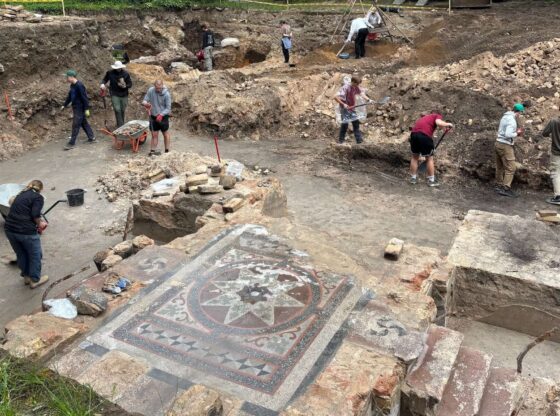

What the Excavated Floor of Vilna’s Great Synagogue Teaches About Sacred Memory
In the heart of Vilnius, a city once revered as the “Jerusalem of the North,” the earth has opened to reveal a sacred past thought to be lost forever. Archaeologists have uncovered the full, polished floor of the 17th-century Great Synagogue of Vilna, a site that was not merely a building but a spiritual epicenter for Diaspora Jewry. For the first time since 1940, the vibrant prayer platform is visible, offering a tangible connection to a world where over 100 synagogues served a community that comprised 40% of the city’s population.
Yet, this unearthing is not just an archaeological triumph; it is a spiritual crucible for the fewer than 3,000 Jews who remain. The discovery forces a profound question: How do we honor a sacred space that was violently desecrated? The debate over the site’s future—whether to build a living community center above the ruins, reconstruct a house of worship, or consecrate the ground as a pure memorial—reflects a deeper struggle over the essence of Jewish identity in the post-Holocaust world.
The physical remnants of the bimah and the ark’s floor are relics of a rich intellectual and religious life, but the dispute over their stewardship reveals that the holiest artifact is not the stone, but the ongoing dialogue about how memory should serve the living.