
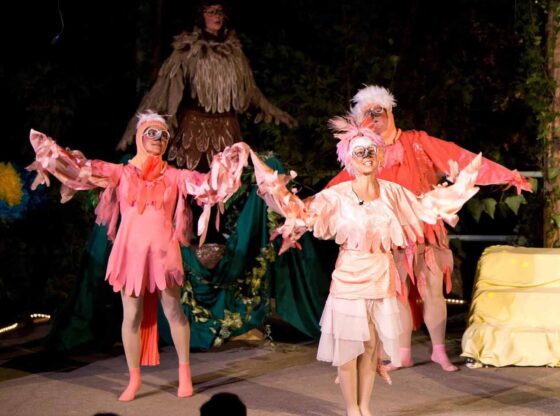

When a beloved spiritual teacher writes a fable, it is rarely just a story. Swami Kriyananda’s “The Singer and the Nightingale” — a tale of a vocalist who loses his voice and rediscovers it through the guidance of forest birds — carries a teaching far deeper than its whimsical surface suggests. For those who staged it, the real lesson came not from the script, but from life itself.
The production, originally performed at Ananda’s Crystal Hermitage, was revived years later for Spiritual Renewal Week. But two weeks before the performance, the director was called to Florida as her brother faced a terminal illness. What followed was a grueling passage through suffering, loss, and the profound witnessing of a soul’s transition. “I watched Master guide him through to the next part of his journey,” she recalls — a promise Paramhansa Yogananda makes to every sincere devotee.
The play went forward, but the director was absent. In that absence lies the fable’s true meaning: sometimes letting go is not a failure of love, but its highest expression. The nightingale’s song does not demand that we remain in the audience; it asks us to trust that the music continues, even when we cannot hear it.