
Two Fantasies, One Truth: The Spiritual Danger of Absolute Claims on Holy Land
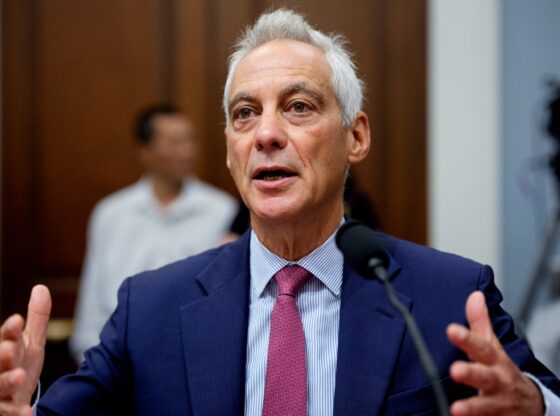
In a forthcoming address to a Tel Aviv audience, former White House Chief of Staff Rahm Emanuel is expected to deliver a rare moral indictment of what he terms “corrosive fantasies” on both sides of the Israeli-Palestinian conflict. The speech, obtained in advance by the Jewish Telegraphic Agency, draws a striking parallel between two seemingly opposing visions: the chant “from the river to the sea” and the pursuit of a Greater Israel.
“Both are fantasies chanted by fanatics,” Emanuel declares in his prepared remarks, calling each vision equally “destructive.” The politician, a potential 2028 presidential candidate, warns that Prime Minister Benjamin Netanyahu’s leadership has turned Israel into a “pariah” and placed the nation on “a countdown clock” for its security. He specifically criticizes American policy that assumed “the best thing Washington could do for Jerusalem was to blindly and silently stand behind your government, without conditions, without demands, and without consequences.”
From a spiritual perspective, Emanuel’s words echo an ancient wisdom: that the Holy Land cannot be possessed by any single earthly power. The land promised to Abraham was always understood as a sacred trust, not a political prize. When either side claims absolute dominion—whether through the cry of “from the river to the sea” or through expansionist settlement—they risk turning divine promise into human idolatry. True holiness lies not in territorial control, but in how we dwell in relationship with God, with the land, and with one another.