
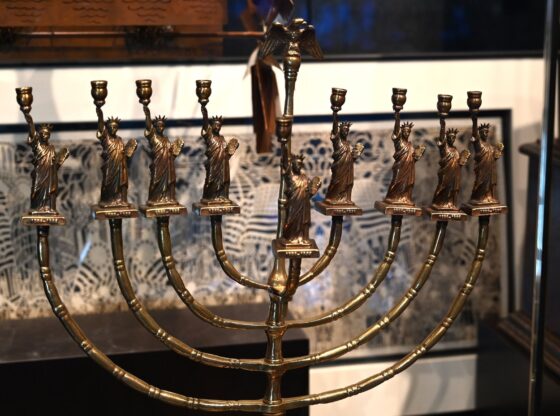

As America marks 250 years since its founding, the Jewish Museum’s “Circa 1776” exhibit has placed a sacred document at the center of the national conversation — the 1790 correspondence between President George Washington and Moses Seixas of Touro Synagogue. This exchange, described by scholars as the “ur text of American Jewish belonging,” offers a spiritual lens through which to view the nation’s semiquincentennial.
Seixas wrote to Washington expressing hope for religious freedom in the new republic. The president’s response, quoting Micah 4:4, envisioned a land where “everyone shall sit in safety under his own vine and fig tree and there shall be none to make him afraid.” This biblical vision transcends political divisions, reminding us that true independence is spiritual — the freedom to worship, to rest, and to dwell in peace.
While 77% of Americans believe the founders would be “disappointed” in today’s union, Jewish organizations are reframing the anniversary not as a celebration of political power, but as a renewal of covenant. The “Shabbat 250” proclamation and civic education rooted in Jewish texts invite us to ask: What does it mean to sit safely under one’s own vine in an age of anxiety? The answer, found in Washington’s own words, is that liberty begins when we honor the sacred space of every soul.