
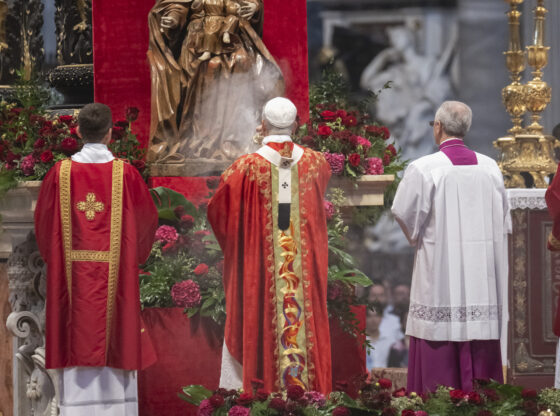

On the solemn feast of Saints Peter and Paul, Pope Leo XIV delivered a homily that transcended the usual veneration of these two towering figures. Speaking before the world’s cardinals—who had just concluded two days of intense meetings—the pontiff did not merely recount the lives of the apostles. Instead, he reframed their very existence as a living parable of unity born from contradiction. The Pope’s message was clear: true spiritual unity is not the absence of conflict, but the transformation of division into divine purpose.
For the spiritual seeker, this homily offers a profound corrective to a modern misunderstanding. We often imagine unity as a placid, frictionless state—a kind of spiritual consensus where everyone agrees and feels comfortable. Yet Peter and Paul stand as a stark counterpoint. Peter, the impulsive fisherman who denied Christ, and Paul, the zealous persecutor turned missionary, clashed openly in the early Church. Theirs was not a polite alliance but a volatile, grace-filled collision. Pope Leo XIV reminded the cardinals that these “pillars of the Church” were not unified by temperament or strategy, but by a shared surrender to a mission greater than themselves. Their unity was a work of the Holy Spirit, forged in the fire of disagreement and the humility of repentance.
This teaching echoes a deeper wisdom found across spiritual traditions: that the path to wholeness runs through, not around, our fractures. In the Christian contemplative tradition, the “dark night of the soul” is not an obstacle to union with God but its very crucible. Similarly, the Zen concept of the “gateless gate” suggests that the doorway to enlightenment is the very barrier we fear. Peter and Paul embody this paradox. Their conflicting visions—Peter’s focus on Jewish tradition, Paul’s radical openness to Gentiles—were not errors to be smoothed over, but tensions that expanded the Church’s understanding of God’s boundless grace. The Pope’s homily quietly suggests that our own internal divisions—between reason and faith, action and contemplation, tradition and innovation—are not signs of spiritual failure but invitations to a deeper, more resilient unity.
For the reader seeking wisdom, the takeaway is both challenging and liberating. You are not called to eliminate the voices of doubt, fear, or disagreement within yourself or your community. Rather, you are invited to hold them in a sacred tension, as Peter and Paul did. The “apostles of unity” were not men who agreed on everything; they were men who agreed on the One thing. Their lives demonstrate that unity is not a destination of harmony, but a daily practice of love that transcends our differences. As Pope Leo XIV implied, the unity we seek is not a product of our efforts, but a gift we receive when we stop trying to force pieces together and instead allow the Spirit to weave our brokenness into a tapestry of grace. In a world that screams for uniformity, the feast of Peter and Paul whispers a more ancient truth: holy division, when surrendered to God, becomes the very ground of communion.