
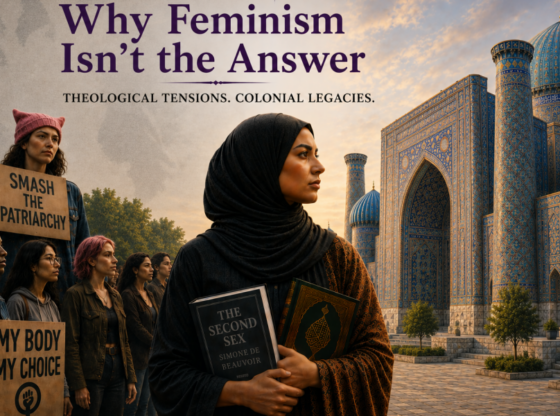

The Unfinished Reckoning: What the Feminist Turn Reveals About Muslim Communities
When a Muslim woman embraces feminism, it is rarely a simple act of rebellion. More often, it is a cry of pain that has gone unheard for generations. The growing number of Muslim women turning to feminist frameworks is not, as some fear, a sign of faithlessness—it is a mirror held up to communities that have too long conflated divine revelation with human tradition.
The Qur’an declares that Allah never wrongs anyone—yet the Arabic word dhulm, meaning oppression or injustice, describes precisely what many Muslim women experience within their own families and institutions. When a woman raised to believe Islam grants her dignity encounters a culture that treats her as property, she faces a crisis: either the religion is flawed, or the people practicing it have strayed.
This is where the real work begins. As the original source notes, “If anyone truly cares about the wellbeing of Muslim women—and Muslim men, for that matter—we must be willing to overcome the set of (faulty) defenses that we have constructed against all perceived attacks on our community.” The question is not whether feminism has answers, but whether Muslims have the courage to confront the jahiliyyah—the ignorance and oppression—that persists within their own ranks.