
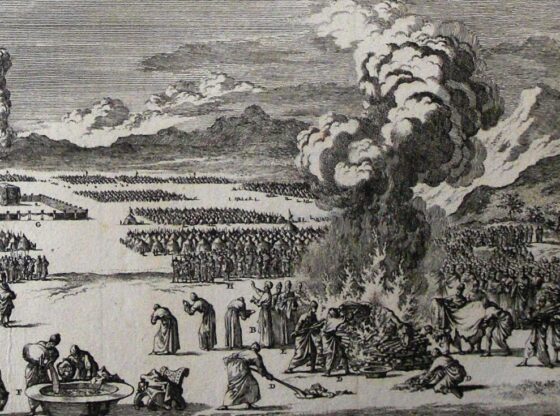

The ancient mystery of the Red Heifer, a ritual of purification through ashes and water that defies rational explanation, has long been a puzzle for spiritual seekers. But according to the Zohar, this very obscurity is the key to a deeper truth about the nature of sacred text itself. The Torah, the kabbalists teach, is not merely a collection of stories or laws—it is a living garment, concealing a divine radiance too powerful for the world to bear directly.
Rabbi Shimon bar Yochai, the central figure of the Zohar, warned against mistaking the surface for the substance. “Woe to the person who says that the Torah comes merely to tell stories and ordinary words,” he declared. “For if this were so, even nowadays, we could compose a Torah from ordinary words, and even more beautiful ones than these.” The stories, he explained, are but the outermost layer, a necessary veil for a reality that would otherwise overwhelm us.
This teaching transforms how we approach even the most perplexing commandments. The Red Heifer, a chok or statute beyond human comprehension, becomes not a frustration but an invitation. It calls us to look beneath the garment, to seek the soul within the soul of Torah—a wisdom that, like the angels who must clothe themselves to dwell among us, can only be approached through layers of hidden meaning.