
The Silent Pass: What a Caravan Raid Reveals About Trust and Divine Protection
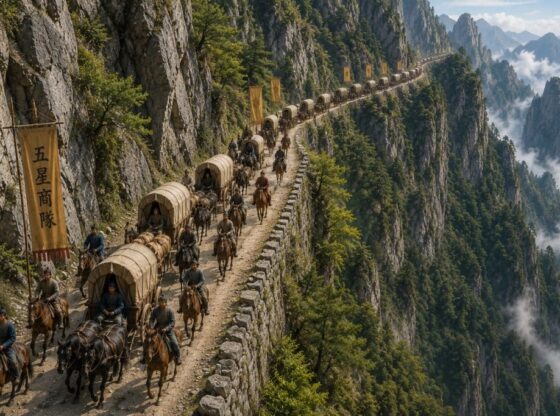
In the latest installment of the epic serial “Far Away,” the caravan’s harrowing journey through a mountain pass becomes more than a tale of survival—it transforms into a profound meditation on human vulnerability and spiritual reliance. The narrative, set against the backdrop of jagged cliffs and oppressive silence, strips away the comfort of civilization to reveal the raw essence of faith under pressure.
The emptiness of the pass, described as “empty eyes” watching from caves, evokes a powerful spiritual metaphor. In Islamic tradition, moments of profound stillness are often where the soul confronts its deepest truths. The absence of birdsong, the cessation of laughter, and the weight of silence create a liminal space where the caravan’s members must confront their own fragility. This mirrors the Qur’anic concept of *khawf* (fear) and *raja’* (hope), where believers oscillate between dread of the unknown and trust in Allah’s decree.
Darius’s quiet recitation of Memdooh’s stanzas—a youthful boast of being “a caravan guard”—serves as a poignant counterpoint to the tension. It is a human attempt to reclaim agency in a world suddenly indifferent to human will. Yet the narrative suggests that true protection lies not in swords or bravado, but in the collective reliance on a power greater than the cliffs that hem them in. As the raid unfolds, the reader is invited to reflect: when all external supports fail, what remains is the unshakeable conviction that no trial arrives without divine permission—and no believer is left entirely alone.