
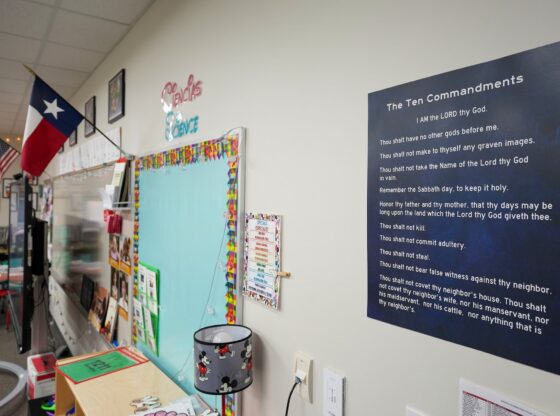

The Secular Classroom as a Sanctuary of Choice
The recent judicial mandate in Galveston, Texas, compelling the display of the Ten Commandments in public schools, invites profound reflection on the nature of spiritual autonomy. When the state inserts specific religious iconography into secular educational spaces, it risks transforming classrooms from arenas of open inquiry into sites of imposed dogma. This legal victory for the state underscores a growing tension between institutional authority and individual conscience.
Rabbi Mara Nathan, lead petitioner in a parallel Supreme Court case, articulates this spiritual imperative clearly: “These are religious documents… They do not belong in a secular public school space.” Her words challenge us to consider whether true faith can flourish under compulsion. The argument for parental determination over political decree suggests that genuine spirituality requires the freedom to choose, rather than the obligation to comply. As society navigates these complex intersections of law and belief, we must ask if our public institutions still serve as neutral grounds where diverse souls can seek wisdom without fear of proselytization. The integrity of the secular sphere is not merely a legal technicality; it is a sacred trust protecting the inner life of every student.