
The Sacred Trust: How Indigenous Land Guardianship Reveals a Deeper Covenant with the Earth
In a world where spiritual and ecological crises intertwine, the Ford Foundation’s recent announcement of $158.5 million in support for Indigenous and local community land rights offers more than a financial milestone—it signals a profound shift in collective consciousness. Five years after the COP26 pledge, this commitment has surpassed its original target by nearly 60%, channeling resources directly to 324 organizations that serve as the living stewards of the planet’s most vital ecosystems.
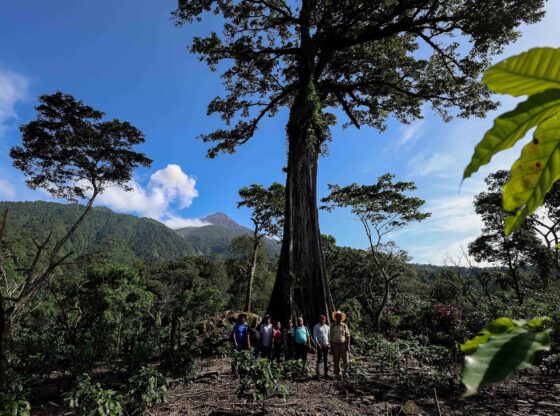
The deeper wisdom here lies not in the numbers, but in the recognition of an ancient truth: those who live closest to the land hold the keys to its preservation. “Community-led funds are vital,” the foundation notes, highlighting the Nusantara Fund in Indonesia and similar mechanisms across Africa and Latin America. These are not mere financial instruments but vessels of ancestral knowledge, where spiritual relationship with the Earth informs every decision about forest guardianship.
This shift toward direct support—27% of all pledge-aligned grants flowing straight to Indigenous and territorial funds—represents a spiritual rebalancing. It acknowledges that the original caretakers of creation, long marginalized by industrial civilization, are now being called upon as teachers. The $43.2 million in direct funding is a form of restitution, a material acknowledgment that wisdom traditions hold solutions that modern institutions have only begun to understand.
As the Forest Tenure Funders Group surpassed its $1.7 billion collective commitment, the message is clear: humanity’s survival depends on honoring the sacred bond between people and place. This is not merely policy—it is a spiritual awakening to the interdependence of all life.