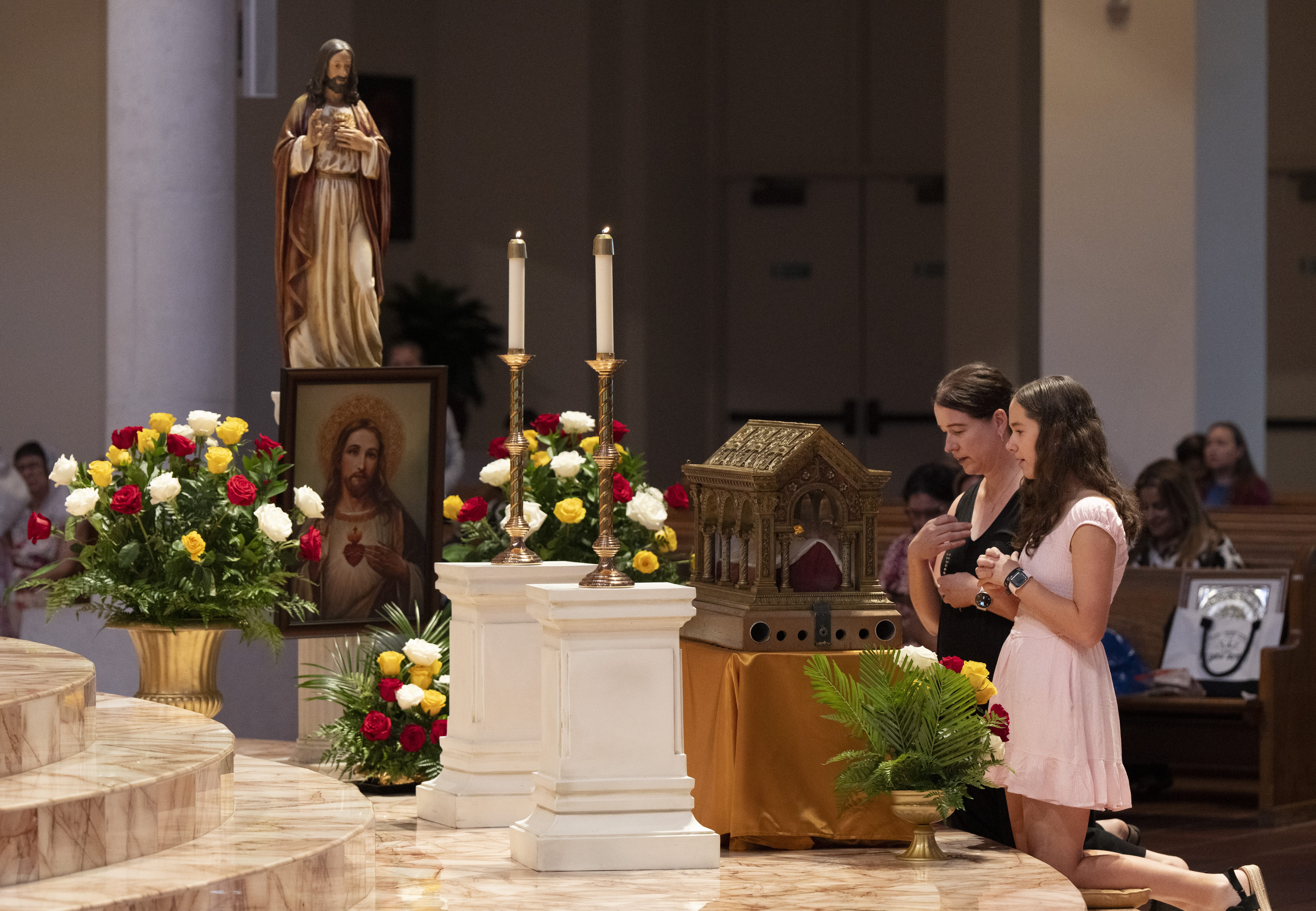

In a quiet ferry of faith across the Atlantic, the earthly remains of a 17th-century French mystic have arrived on American soil. The first-class relics of St. Margaret Mary Alacoque—her clavicles, two ribs, and a fragment of her brain—are now traveling the United States, making their next pilgrimage stop at the Basilica of the National Shrine of the Assumption of the Blessed Virgin Mary in Baltimore. Sponsored by the Knights of Columbus, this journey marks the 250th anniversary of the Declaration of Independence and follows the June 11 consecration of the nation to the Sacred Heart of Jesus. For the Atlantean Tribune, this is not merely a tour of old bones; it is a profound spiritual summons.
The physicality of these relics—the nearly 150-pound reliquary, the preserved clavicles, the small piece of brain—forces a question that modern spirituality often sidesteps: Why do we honor the dead in this way? Across wisdom traditions, from the veneration of Buddhist stupas to the relics of Christian saints, the body is not seen as disposable packaging. It is the vessel through which the soul learned to love. St. Margaret Mary’s visions of the Sacred Heart—a heart on fire, encircled by thorns, visible outside the chest—were not abstract theology. They were a visceral, embodied revelation that divine love is tangible, wounded, and burning. Her relics, then, are not curiosities but remnants of a life that became a living prayer.
Deeper context from the spiritual traditions reveals that relics serve as anchors for collective devotion. In the Gospel of Thomas, Jesus says, “Split a piece of wood, and I am there; lift up a stone, and you will find me.” The sacred is not confined to the ethereal; it permeates matter. St. Margaret Mary’s own story—a woman who endured ridicule and doubt before her visions were accepted—echoes the wisdom of the Desert Fathers, who taught that true holiness often appears in the most unlikely vessels. Her brain, the organ of thought, and her ribs, the cage of the heart, remind us that the journey to God is not a flight from the body but a transformation of it.
The timing of this pilgrimage, coinciding with America’s 250th anniversary, invites a deeper reflection. Archbishop William E. Lori will celebrate Mass on July 5 at the basilica, welcoming the faithful to venerate the relics. But the real consecration is not of a nation—it is of each heart. St. Margaret Mary heard Jesus say that he wanted to show his love for people by encouraging a special devotion to his Sacred Heart. In an age of digital distraction and spiritual fragmentation, these relics call us back to a simple, uncomfortable truth: Holiness is not a concept. It is a bone, a flame, a thorn. For the seeker of wisdom, the takeaway is clear: Do not look for the Sacred Heart only in visions or in reliquaries. Look for it in the quiet, wounded places of your own life, where love is still burning, even now.