

The Sacred Geometry of Service: What a 250-Year-Old Lodge Reveals About Masonic Devotion
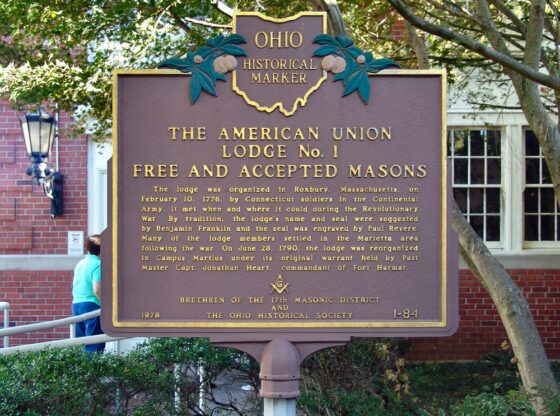
In an age of fleeting loyalties and disposable institutions, the recent 250th anniversary of American Union Lodge No. 1 stands as a testament to the spiritual discipline of commitment. Chartered in the crucible of revolution—February 1776—this traveling military lodge did not merely survive; it became a living symbol of Masonic resilience when the profane world was tearing itself apart.
The lodge’s early history reads as a meditation on sacrifice. After the Battle of Brooklyn Heights, its charter Worshipful Master, Joel Clark, was captured and died in a British prison known as the Old Brick Church. The lodge ceased operations, its members scattered like seeds across war-torn colonies. Yet the Craft does not abandon its own. In early 1779, the lodge resumed its labors in Reading, Connecticut, and soon found itself at West Point, where on the Feast of Saint John the Baptist, General George Washington himself attended a grand procession and banquet.
What makes this lodge unique is not merely its military origins but its embodiment of the Masonic principle that spiritual work must continue even—especially—when worldly structures collapse. As Right Worshipful Brother Dan Hrinko notes, the lodge’s survival through dispersion and death reflects a deeper truth: the temple is built not of stone but of unwavering intention. The 250-year milestone is not a celebration of age but of the eternal renewal that comes when brothers commit to the Great Architect’s design.