
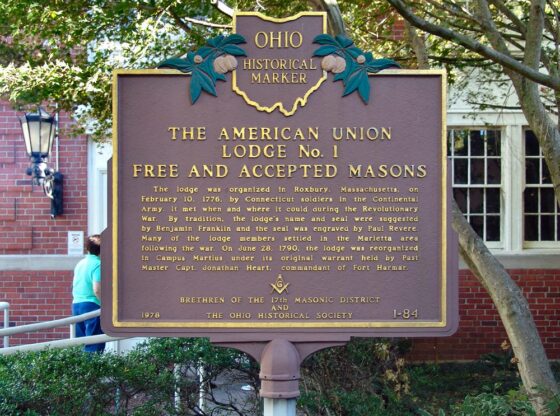

In an era when spiritual institutions often crumble under the weight of worldly conflict, American Union Lodge No. 1 stands as a living testament to the unbreakable covenant between Freemasonry and the Divine Architect. Chartered in February 1776—a mere whisper before the Declaration of Independence—this traveling military Lodge did not merely survive the American Revolution; it became a vessel for the sacred amidst the profane.
What makes this Lodge spiritually significant is not its age but its capacity for resurrection. After the Battle of Brooklyn Heights, when charter Worshipful Master Joel Clark was captured and died in a British prison known as the Old Brick Church, the Lodge ceased operations. Its members were scattered, captured, or killed. Yet in early 1779, like a phoenix rising from the ashes of war, the Lodge resumed its labors in Reading, Connecticut.
Consider the spiritual symbolism: a Lodge that dies and is reborn mirrors the initiatic journey of every Mason—death to the old self, resurrection into light. When General Washington visited on the Feast of Saint John the Baptist in 1779, and again on the Feast of Saint John the Evangelist that same year, he witnessed not a military meeting but a spiritual assembly where the possibility of forming a Grand Lodge was discussed. The true architecture being built was not of stone, but of the soul.