
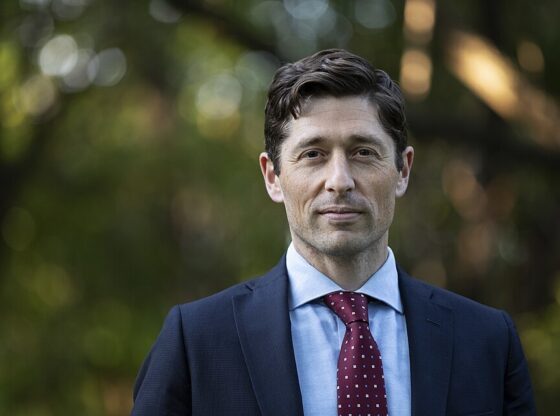

In a move that has stirred both civic and spiritual discourse, Minneapolis Mayor Jacob Frey signed ordinances on Sunday that repeal a 38-year-old ban on adult bathhouses and sex venues. The ban, enacted during the height of the AIDS crisis in 1986, was described by advocates as a relic of fear rather than a tool for public health. Council Member Robin Wonsley, who sponsored the repeal, stated, “These are places of refuge for our most marginalized community members.” The ordinances aim to shift the city’s approach toward harm reduction and dignity, recognizing such spaces as potential sanctuaries rather than sites of moral hazard.
For the spiritually attuned reader, this legislative change invites a deeper inquiry: What does it mean to reclaim “refuge” in a context long stigmatized by fear and judgment? Across wisdom traditions, the bathhouse has held a sacred role—from the Roman thermae, where citizens gathered for cleansing and philosophical exchange, to the Japanese onsen, revered as places of purification and communal healing. In many indigenous cultures, water rituals were not merely hygienic but sacramental, washing away not only physical dirt but spiritual burdens. The Minneapolis repeal, therefore, is not simply a policy adjustment; it is a potential reopening of a pathway toward wholeness for those who have been cast out.
The spiritual significance of this shift lies in its challenge to a dualistic worldview that separates body from soul. Many religious traditions, particularly in the West, have historically viewed the body with suspicion, especially in its sensual expressions. Yet the Hebrew scriptures celebrate the Song of Songs as an allegory of divine love, and early Christian mystics like St. John of the Cross used intimate imagery to describe union with God. By repealing a ban rooted in the AIDS-era panic of the 1980s—a time when fear of death and disease was projected onto marginalized groups—Minneapolis is acknowledging that true refuge cannot be built on exclusion. As the Buddhist teacher Thich Nhat Hanh taught, “The practice of peace and reconciliation is one of the most vital and artistic of human actions.”
The deeper context here is a reckoning with how societies have used shame to control bodies and desires. The original ban emerged from a climate of moral panic, where bathhouses were scapegoated as vectors of disease rather than understood as community anchors. Today, public health experts increasingly endorse harm reduction models that prioritize safety, education, and dignity over prohibition. For the seeker of wisdom, this is a parable about the danger of conflating fear with righteousness. When we make laws from terror, we build walls where there should be doors. The repeal invites us to ask: In our own lives, what outdated bans—against self-acceptance, against vulnerability, against love in its many forms—are we still enforcing?
The takeaway for the reader is a call to examine the sacred geography of refuge. True sanctuary is not merely a place free from harm, but a space where the whole self—body, mind, and spirit—can be held without judgment. Whether in a bathhouse, a church, a meditation hall, or a quiet room at home, the soul longs for environments where it can shed the armor of shame. The Minneapolis ordinance reminds us that spiritual maturity requires us to distinguish between genuine moral wisdom and the inherited fears of a past age. As the city moves forward, may we all find the courage to repeal the inner bans that keep us from becoming places of refuge for one another—and for ourselves.