
The Ring, the Feast, and the Question Every Seeker Must Answer
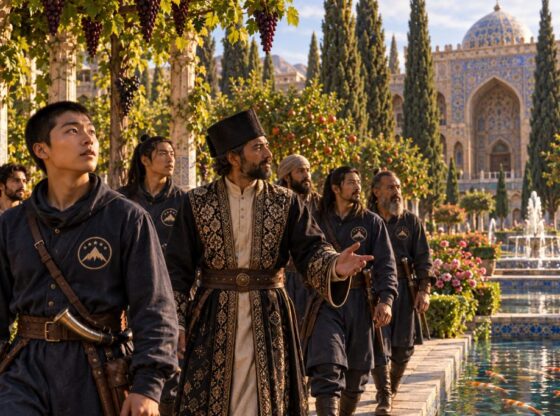
In the twenty-seventh installment of the serialized tale Far Away, the traveler Darius passes from the dust of the road into a Persian citadel’s impossible gardens — stone channels, jasmine, fountains where orange and white fish drift beneath the surface. “After months of dust, snow, mountains and mud,” he recalls, “the place seemed almost impossible.”
What follows is a dinner, a duel, and an offer of wealth and power beyond anything he had imagined. But the story’s spiritual weight rests in a quieter moment: a pond of fish that stirs a memory of his father, gone to the army, and of a day in town selling peanuts as a boy.
This is the perennial test of the seeker — not poverty, which strips us honestly, but abundance, which flatters us into forgetting. The prince’s ring is not merely gold; it is the world’s oldest bargain, offered in a garden that looks like paradise but is not. The question the tale leaves us with is ancient: when the feast is set and the duel is won, will we still remember the pond we came from?