

The Prophetic Witness of a Pilgrim Church: What a Vatican Emissary’s Tour Reveals About the Gospel of the Margins
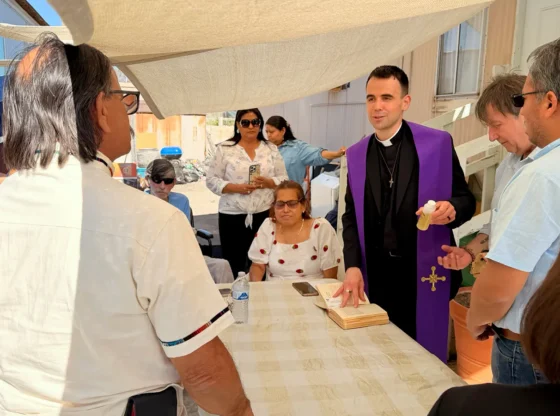
When the bullet struck down Lorenzo Salgado Araujo on a Houston highway, a Vatican priest was already sitting in a parish hall, listening to immigrant families whisper their fears into the night. The Rev. Mattia Ferrari, coordinator of the World Meeting of Popular Movements, did not come to America with a policy brief. He came, as he told those gathered, to serve—not to lead. This is the ancient rhythm of a Church that remembers its founder walked among the forgotten.
Ferrari’s tour, born from a simple curiosity expressed at last fall’s Vatican convening, has become a living parable of what Pope Leo XIV called “a poor Church for the poor.” In Houston, in Los Angeles, in Chicago, the priest has witnessed what he describes as “suffering that is completely unfair, completely unjust.” But he has also witnessed something else: grassroots leaders who refuse to be victims. “We are here to serve, not to lead,” Ferrari insists, echoing a spiritual tradition that sees divine presence not in palaces but in the shared struggle for land, housing, and work.
The killing of Salgado Araujo is not merely a news event. For Ferrari, it is “the top of the sufferings”—a stark reminder that the gospel’s call to “integral human development” demands a Church that takes risks, that is “courageous, prophetic and joyful.” In this moment, the Vatican’s emissary is not bringing answers from Rome. He is bearing witness to the truth that the poor themselves are the protagonists of their own liberation.