
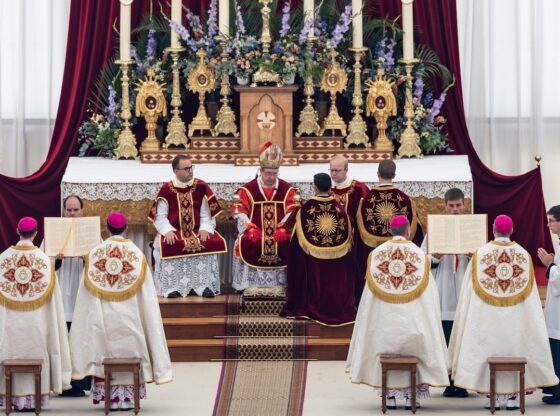

The Mirror of Fractured Authority: What Antipopes Reveal About the Soul’s Search for Certainty
In the quiet valleys of Switzerland and the fortified cathedral of Andalusia, two communities claim the same inheritance: the unbroken authority of Christ’s Church. Yet their mutual excommunications and competing popes reveal less about ecclesiastical politics than about the human heart’s desperate hunger for absolute certainty in an age of spiritual fragmentation.
The Palmarian Catholic Church, with its barbed-wire walls and self-proclaimed popes, stands as a stark reminder that when believers lose trust in institutional grace, they often construct alternative structures of rigid control. The SSPX’s rejection of Peter III’s overtures—dismissing him as irrelevant—demonstrates how even dissenting movements maintain boundaries against those they consider more radical than themselves.
This phenomenon transcends Catholicism. Every tradition faces the temptation to preserve purity through isolation, mistaking separation for sanctity. The wandering bishops mirror our own spiritual wanderings—the impulse to find a perfect teacher, a flawless community, an untainted path. Yet the Gospel’s wisdom suggests that holiness emerges not from perfect structures but from humble hearts willing to encounter God amid imperfection.
The lesson for seekers is profound: the search for an unblemished authority often becomes an idol, distracting from the still, small voice that speaks within the chaos of ordinary life.