
The Mahasiddha of Sixth Avenue: How One Teacher Revives Buddhism’s Radical Edge
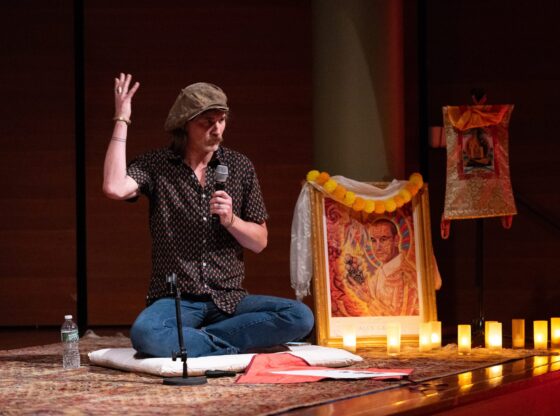
In a Greenwich Village now dominated by luxury high-rises rather than countercultural ferment, Chris Kelley stands as a living link to an older, wilder spiritual tradition. His course at Eugene Lang College, now in its fifth year, reframes the Buddha not as a serene meditator but as an original revolutionary who rejected caste, priestly authority, and the very concept of a fixed self. Kelley draws a direct line from the ancient mahasiddhas—tantric lay practitioners who operated outside monastic walls—to the modern psychonaut, arguing that Buddhism’s most potent teachings have always emerged from the margins.
His project Psychedelic Sangha, described as a home for “misfit seekers,” combines dharma practice with consciousness exploration in ways that challenge Buddhist orthodoxy. Kelley has performed prostrations across every bridge in New York City as performance art and organized chöd rituals set to heavy metal. “The Buddha proposed something radical,” Kelley teaches: “the reality of suffering, and the possibility of liberation from it.” This is not a comfortable Buddhism of cushions and incense, but a path that demands we question every authority—including Buddhism itself.